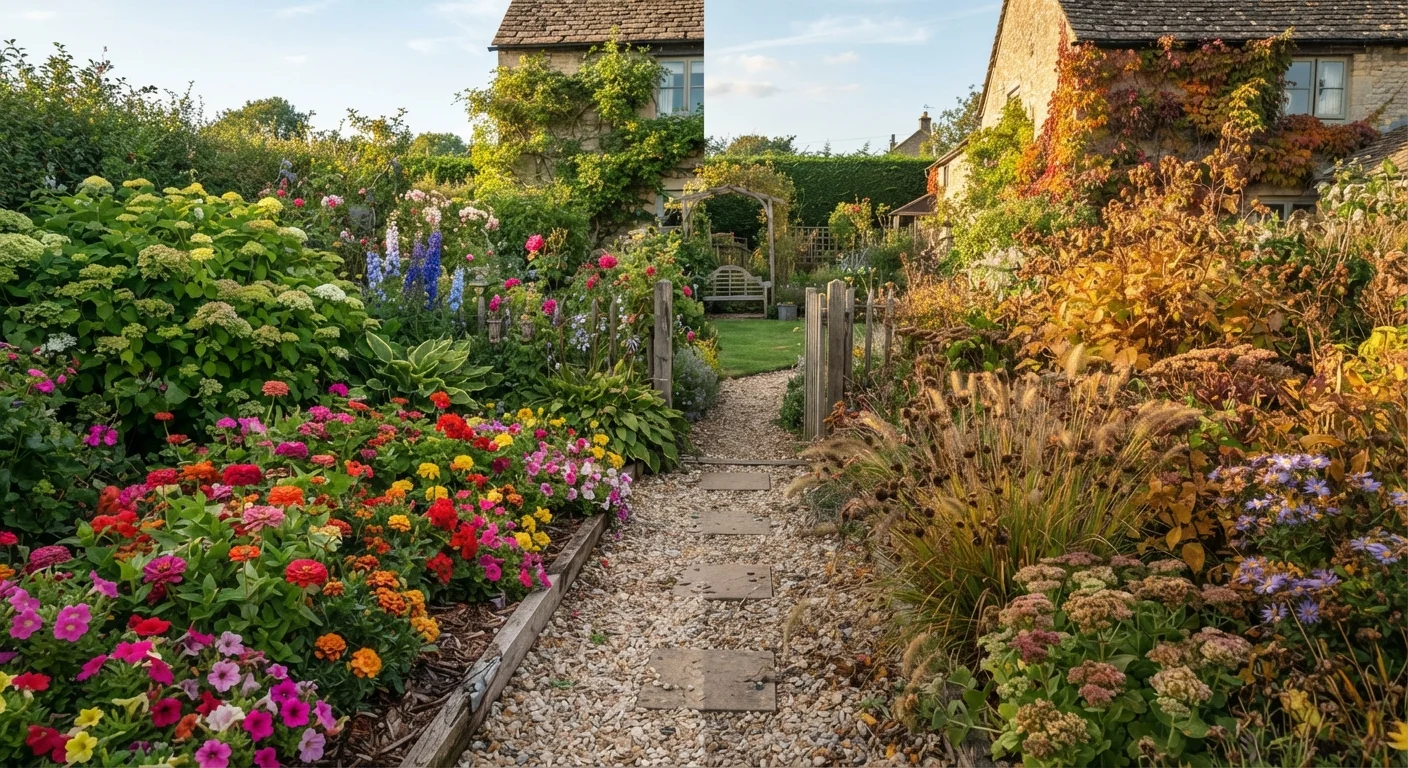
What Actually Separates Annuals from Perennials
The distinction comes down to life cycle. Annuals complete their entire growth cycle — germinating, flowering, setting seed, and dying — within a single growing season. You plant them fresh each year. Perennials, by contrast, die back to the ground in winter but regrow from the same root system the following spring, returning for many years.
This biological difference shapes everything downstream: cost, labor, bloom duration, and how you plan your beds. Neither category is universally superior — they serve different design functions, and understanding those roles is what lets you build a garden that actually works across multiple seasons.
A few plants blur the line. Some tender perennials (plants that are perennial in warmer climates) are grown as annuals in colder zones because they can't survive frost. Your USDA hardiness zone matters significantly when selecting perennials — a plant rated for Zone 7 will not reliably return in Zone 5. Always check zone compatibility before assuming a perennial will come back in your garden.
Cost, Labor, and Long-Term Value
Annuals tend to cost less per plant at the nursery, but you repurchase and replant the entire display every year. That annual spend adds up quickly, particularly for larger beds. Perennials carry a higher per-plant price upfront, but most spread or can be divided over time — one clump becomes three or four plants within a few seasons, essentially expanding your garden at no additional cost.
| Criterion | Annuals | Perennials |
|---|---|---|
| Lifespan | One growing season | Returns for many years |
| Upfront cost per plant | Generally lower | Generally higher |
| Long-term cost | Higher (repurchased yearly) | Lower (spreads and divides) |
| Bloom duration | Continuous until frost | Typically 2–6 weeks per season |
| Maintenance level | Higher (deadheading, watering) | Lower once established |
| Design flexibility | High — change layout yearly | Low — committed placement |
| Hardiness zone dependence | Moderate | High — zone match critical |
Labor follows a similar pattern. Annuals require consistent deadheading (removing spent flowers to encourage continued blooming) and more frequent watering since their root systems stay shallow. Perennials demand heavier effort in their first year as they establish, then generally need less intervention — though they do require dividing every few years to stay vigorous.
If you're thinking about how garden work fits into your overall seasonal home routines, a seasonal home maintenance schedule can help you map garden tasks alongside other property upkeep so nothing gets overlooked.
Bloom Timing and the Gap Problem
One of the most common frustrations with perennial-only gardens is uneven bloom timing. Most perennials flower for two to six weeks, then go green for the rest of the season. A garden planted entirely with perennials can look spectacular in June and nearly bare in August — unless you've deliberately selected varieties with staggered bloom windows.
2–6 weeks
Typical perennial bloom window per season
Most perennial species flower for a relatively short period, which is why bloom-staggering across varieties is a core principle of perennial bed design.
3–4 plants
Division yield from one mature perennial clump
Many perennials — such as daylilies and coneflowers — can be divided every three to five years, multiplying your plant stock without additional cost.
Year 2–3
When perennial investment typically breaks even
Once established perennials begin spreading and no longer need replanting, the cumulative cost advantage over annuals generally becomes apparent by the second or third season.
Annuals solve this elegantly. Because they bloom continuously until frost, they fill the gaps between perennial bloom cycles and keep the garden visually active all season. The practical approach most experienced gardeners use is to treat perennials as the structural backbone — planted for their foliage, form, and reliable seasonal peaks — and annuals as the supporting cast that bridges the quiet periods.
Spacing matters here too. Perennials spread as they mature, so leaving adequate room between plants prevents overcrowding in years two and three. If you're newer to planning bed layouts, understanding proper plant spacing will help you avoid the very common mistake of planting too densely at the start.
Building a Garden That Works Season After Season
The most resilient garden designs don't choose one category exclusively — they layer both strategically. A practical framework: start with a perennial structure that accounts for roughly 60–70% of your planting area, selected for staggered bloom times and varying heights. Then use annuals to fill gaps, add season-long color in high-visibility spots, and experiment with combinations you might want to make permanent later.
Fall is also a critical planning moment. After the first frost, perennials need cutting back or mulching depending on the species, and it's the ideal time to plant spring-blooming bulbs alongside your perennial beds. Fall garden prep tasks like soil amendment and mulching directly affect how well your perennials return the following spring.
Your bed setup also influences which approach works best. Raised beds, for instance, offer excellent soil control that benefits both annuals and perennials differently — comparing raised beds to in-ground planting can help you decide which structure suits your goals before you commit to a layout.
Biennials: The Third Category Worth Knowing
A small but notable group of plants — including foxglove and hollyhock — are biennials. They grow foliage in their first year, bloom in their second, then die. They're often sold alongside annuals and perennials at nurseries without clear labeling, so it's worth checking plant tags carefully. Biennials that self-seed readily can effectively behave like perennials in practice, reappearing in your garden each year from dropped seeds.