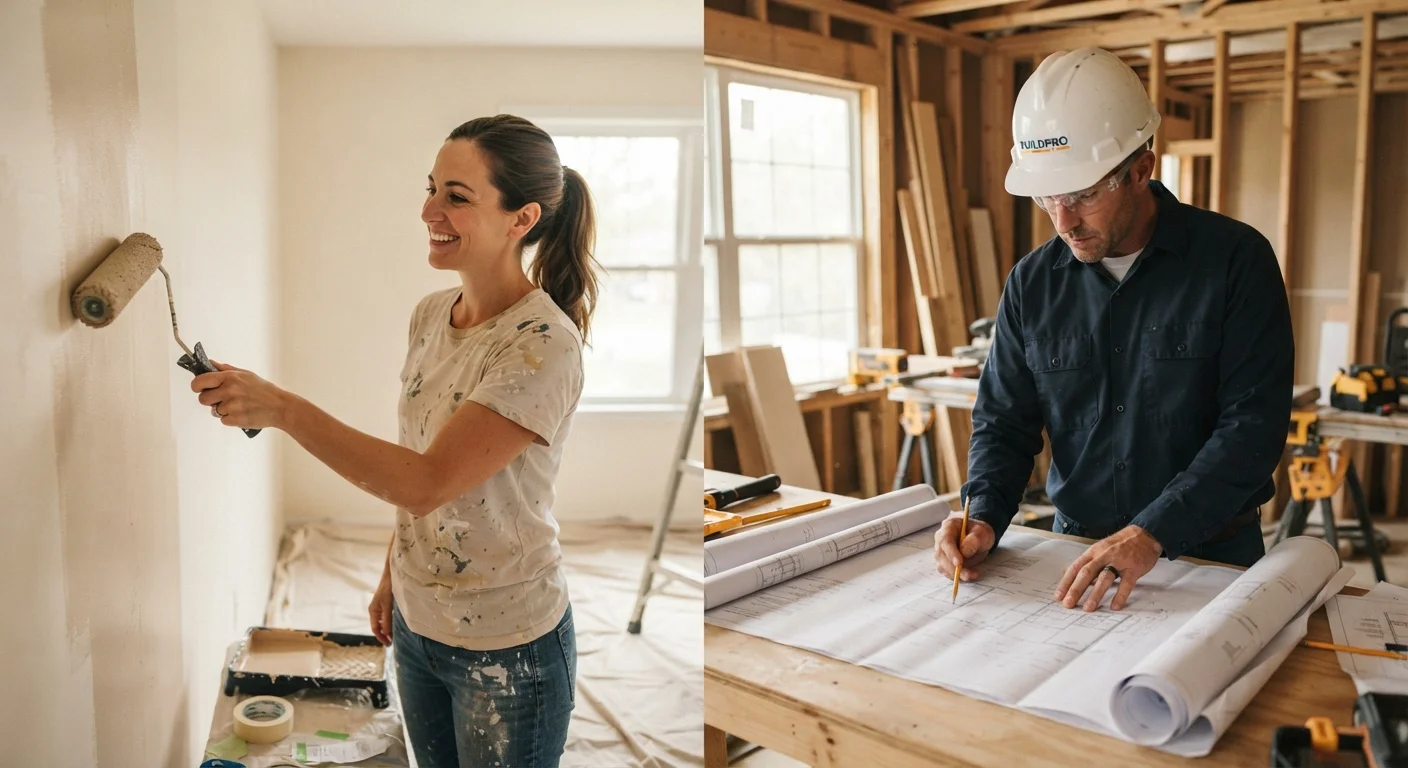
The Core Question: What's Actually at Stake?
Before picking up a tool or calling a contractor, ask one foundational question: What happens if this goes wrong? The answer tells you more than any cost estimate.
Projects fall into three broad risk tiers:
- Low stakes: A mistake is inconvenient and fixable — repainting a room, replacing a faucet, installing a ceiling fan where wiring already exists.
- Moderate stakes: An error costs real money or causes property damage — tiling a bathroom, installing flooring, building a deck.
- High stakes: A mistake creates safety hazards, code violations, or legal liability — rewiring a panel, moving load-bearing walls, working on gas lines or mains plumbing.
High-stakes projects are not purely about skill. Many are regulated by local building codes, require permits, and must be inspected by a licensed professional regardless of how capable you are. Skipping that process can void your homeowner's insurance, complicate a future home sale, or create genuine danger for your household. See our guide to DIY electrical work for a clear breakdown of where that line falls in one of the most commonly misunderstood trade areas.
The Four-Factor Framework
Run every project through these four filters before deciding:
1. Permits and Codes
Check with your local building department first. In most U.S. jurisdictions, work involving structural changes, electrical upgrades, HVAC modifications, plumbing into mains, and additions requires a permit and inspection. Permitted work must often be done — or at minimum supervised — by a licensed trade professional. This isn't optional.
2. Safety Risk
Be honest about consequences, not just probability. Even experienced DIYers should avoid work on gas lines, main electrical panels, roofing at significant heights, or anything structurally load-bearing. The risk isn't just to you — it affects your family and future occupants.
3. Skill and Tool Requirements
Many tasks look simpler on video than they are in practice. Tile work, drywall finishing, and cabinet installation all have steep learning curves that show in the finished product. Ask yourself: Do I have the tools? Have I done anything similar before? Is this a skill worth developing, or do I just need the result?
Track Your Time Before You Start
Before committing to a DIY project, estimate realistically how many hours it will take — then double it if it's your first time doing that type of work. Compare that time investment against contractor quotes and your own schedule. A weekend project that stretches into three weekends has a real cost, even if it doesn't show up in a receipt.
4. True Cost Comparison
DIY is not automatically cheaper. Factor in tool purchases or rentals, material waste from errors, your time at a realistic hourly value, and the cost of professional correction if the project fails. When you read a contractor quote carefully, you'll often find the labor premium is narrower than expected — especially for skilled trades.
| DIY | Hiring a Contractor | |
|---|---|---|
| Typical cost | Lower (materials + tools) | Higher (includes licensed labor) |
| Safety for regulated work | Not appropriate | Required by code |
| Permit compliance | Often ineligible | Handled by professional |
| Quality consistency | Varies with skill level | More predictable outcome |
| Time investment | High — your own time | Low — contractor manages schedule |
| Liability & insurance | Homeowner bears full risk | Contractor carries coverage |
| Best project type | Cosmetic, low-risk tasks | Structural, regulated, complex work |
What DIY Does Well
There's a wide category of home projects where a motivated homeowner with basic tools can do excellent work, save meaningful money, and build real capability over time. These generally share a few traits: mistakes are visible and correctable, no permit is required, and the skills transfer to future projects.
- Interior and exterior painting
- Landscaping, lawn care, and garden installation
- Replacing light fixtures, switches, or outlets (on existing, de-energized circuits)
- Installing new flooring over a prepared subfloor
- Caulking, weatherstripping, and door hardware replacement
- Minor drywall patching
- Basic deck maintenance — staining, sealing, replacing individual boards
For smaller repairs where you're unsure whether DIY or paid help makes more sense, our balanced look at hiring a handyman covers the cost-versus-convenience trade-off in detail.
When to Call a Licensed Professional
Some projects have non-negotiable professional thresholds. This isn't about doubt in your abilities — it's about how work is regulated and what's provably safe.
Unpermitted Work Creates Lasting Problems
Home improvements done without required permits can create serious complications when you sell your home or file an insurance claim. Buyers' inspectors and insurers look for unpermitted additions, electrical work, and structural changes. Correcting unpermitted work after the fact is typically more expensive than doing it right the first time. Always verify permit requirements with your local building department before starting any significant project.
Always hire a licensed professional for:
- Main electrical panel upgrades, new circuit installation, or service changes
- Gas line installation, repair, or appliance hookup
- Structural modifications — removing or altering load-bearing walls, adding headers, foundation work
- Roofing on steeply pitched or multi-story structures
- HVAC system installation or refrigerant work (EPA Section 608 certification is federally required for refrigerant handling)
- Mains plumbing — connecting to or altering supply or drain-waste-vent systems
Beyond safety, licensed contractors carry insurance. If a subcontractor is injured on your property or a project causes damage, your liability exposure is significantly different depending on whether the work was permitted and insured. That protection is part of what you're paying for.
All of these principles apply whether you own or rent — for context on how improvement decisions intersect with your housing situation, see our overview of renting vs. buying trade-offs.