What You Can and Can't Safely Do Yourself
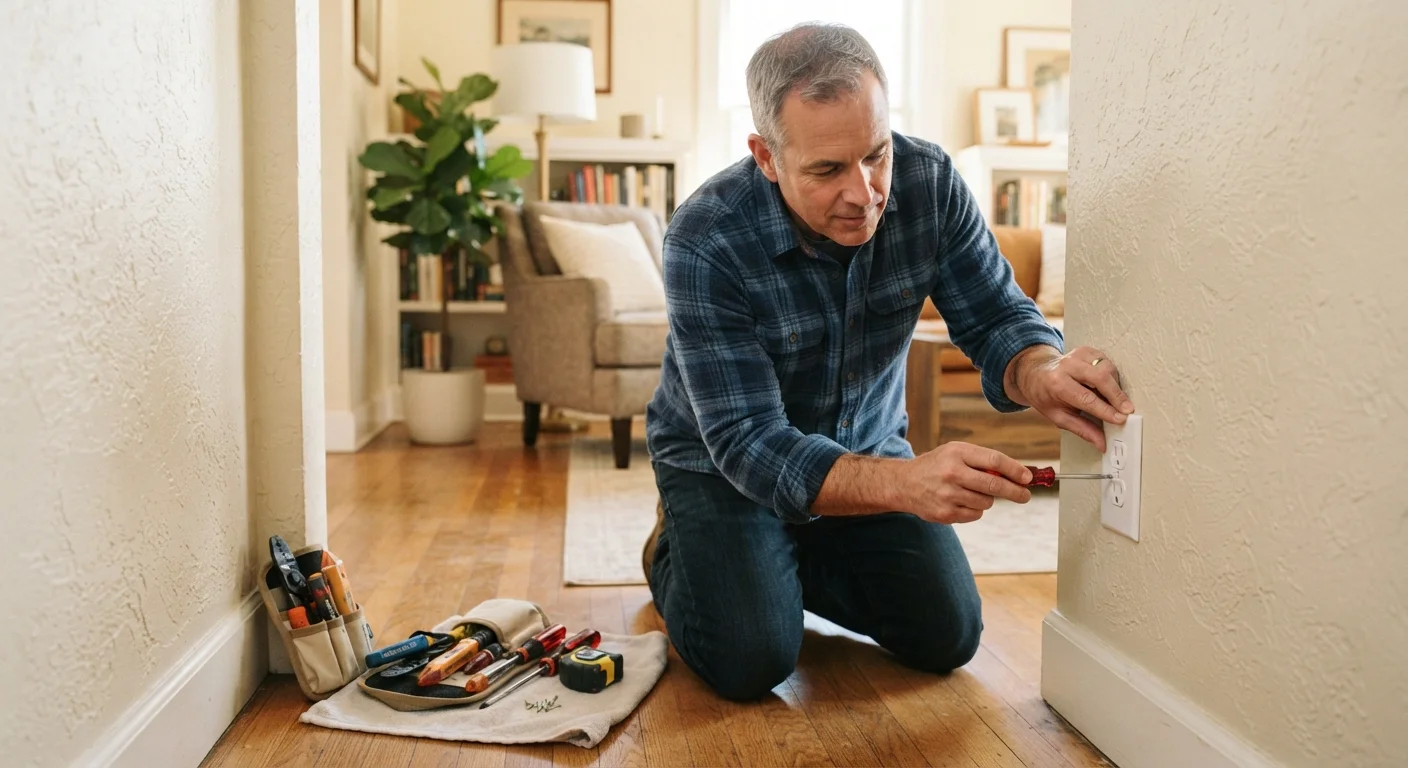
Electrical work sits in an unusual category among home maintenance tasks. Some jobs — swapping a light switch, replacing an outlet, or installing a ceiling fan on an existing circuit — are genuinely within reach for a careful, informed homeowner. Others, including panel upgrades, new circuit installation, and any work involving service entry wiring, carry serious risk of fire, electrocution, or code violations that can follow a property for decades.
The divide isn't about confidence or YouTube tutorials. It's about physics, local building codes, and the limits of what can be safely reversed if something goes wrong. Understanding that divide is the first step toward working smart. For a broader look at when DIY effort pays off and when a professional is the wiser call, see our practical DIY vs. contractor framework.
Myth
If I flip the breaker off, the wiring is completely safe to touch.
Fact
Turning off a breaker removes power from that circuit, but not necessarily from every wire in the box or near your work area.
A circuit breaker controls one circuit. In your electrical panel, the wires feeding power into the panel from the utility — called service entrance conductors — remain energized at all times, even with the main breaker off. These are typically found at the very top of the panel and are always live unless the utility itself disconnects power at the meter. Touching them is immediately life-threatening.
Even on circuits you've switched off, a multimeter or non-contact voltage tester should always confirm zero voltage before you touch any wire. Mislabeled breakers are common in older homes, and shared neutral wires can carry voltage from adjacent circuits. Verify — don't assume.
Myth
Electrical code is optional — it's just bureaucratic red tape.
Fact
Electrical codes are minimum safety standards developed from documented causes of fires and electrocutions.
The National Electrical Code (NEC), adopted in some form by most U.S. states and localities, is updated every three years based on failure analysis of real incidents. Requirements like GFCI protection in wet areas, AFCI breakers in bedrooms, and minimum wire gauge for circuits exist because their absence has caused documented injuries and deaths.
Local jurisdictions may adopt a version of the NEC with additional amendments. Work that doesn't meet code isn't just technically non-compliant — it may represent a genuine hazard. This is also why renovation myths about permits slowing things down can lead homeowners into real trouble.
Myth
As long as the wires are the same color, any connection is fine.
Fact
Wire color conventions are not universally standardized across all installations, and older homes may have inconsistent or reversed wiring.
In standard modern U.S. residential wiring, black is hot, white is neutral, and green or bare copper is ground. But this hasn't always been consistently followed — especially in homes wired before the 1980s, or in work done by unlicensed individuals. White wires are sometimes used as hot conductors in switch loops, which should be marked with black tape but often isn't.
Always test with a voltage tester before assuming a wire's role based on color alone. Connecting wires incorrectly — even with matching colors — can energize the wrong parts of a fixture, create shock hazards, or cause appliances to fail unsafely.
Myth
Any licensed handyman can legally do electrical work.
Fact
Most states require a licensed electrician for permitted electrical work; a general handyman license does not typically cover this.
Licensing requirements for electrical work vary by state and locality, but in most jurisdictions, any work that requires a permit must be performed by — or at minimum supervised by — a licensed electrician. A general contractor or handyman license does not automatically authorize electrical work. Hiring an unlicensed person for permitted electrical tasks can void permits, create liability, and leave you responsible for any resulting hazards.
For minor, unpermitted tasks like replacing a like-for-like outlet or switch, a skilled handyman may be a reasonable option in some areas. Our article on hiring a handyman for small repairs walks through how to evaluate those trade-offs carefully.
Myth
Electrical panels are just big breaker boxes — replacing a breaker is a simple DIY job.
Fact
Panel work involves components that remain energized even with the main breaker off, and is regulated in virtually every jurisdiction.
The service entrance wires inside a panel — the thick cables entering from the top — carry full utility voltage at all times. Even experienced electricians treat panels with significant caution. Replacing a breaker requires working in close proximity to these always-live conductors, and a slip can be fatal.
Beyond the physical danger, panel work almost universally requires a permit and inspection. Unpermitted panel modifications can create fire hazards that your insurance company may use to deny a future claim. If your panel needs work, a licensed electrician is the appropriate professional — full stop.
The Permit and Inspection Reality
One of the most common — and costly — mistakes homeowners make is assuming electrical work only needs a permit if it's complicated. In most U.S. jurisdictions, any work beyond simple device replacement (switches, outlets, fixtures on existing wiring) requires a permit and inspection. That includes adding a circuit, upgrading a panel, moving wiring, or finishing a basement with new electrical.
Skipping Permits Has Long-Term Consequences
Unpermitted electrical work is one of the most common red flags found during home sale inspections. Buyers may demand that unpermitted work be brought up to code — at the seller's expense — or walk away from a deal entirely. In some cases, homeowners have been required to open walls to verify that concealed wiring meets code. Always pull the required permits before starting work that requires them.
Unpermitted work doesn't just create a compliance headache — it can invalidate homeowner's insurance claims related to electrical fires, flag during a home sale inspection, and require costly removal and redo. Our companion article on permits and inspections explains what the process actually involves and why it protects you as much as it regulates you.
Requirements vary by municipality, so always check with your local building department before starting any project beyond basic device swaps. Don't rely on what a neighbor did, or what was acceptable in a previous home — codes and enforcement levels differ significantly by location.
This article provides general educational information about home electrical work and is not a substitute for advice from a licensed electrician. Always follow your local building codes and consult a qualified professional for any work that is regulated, unfamiliar, or potentially hazardous.