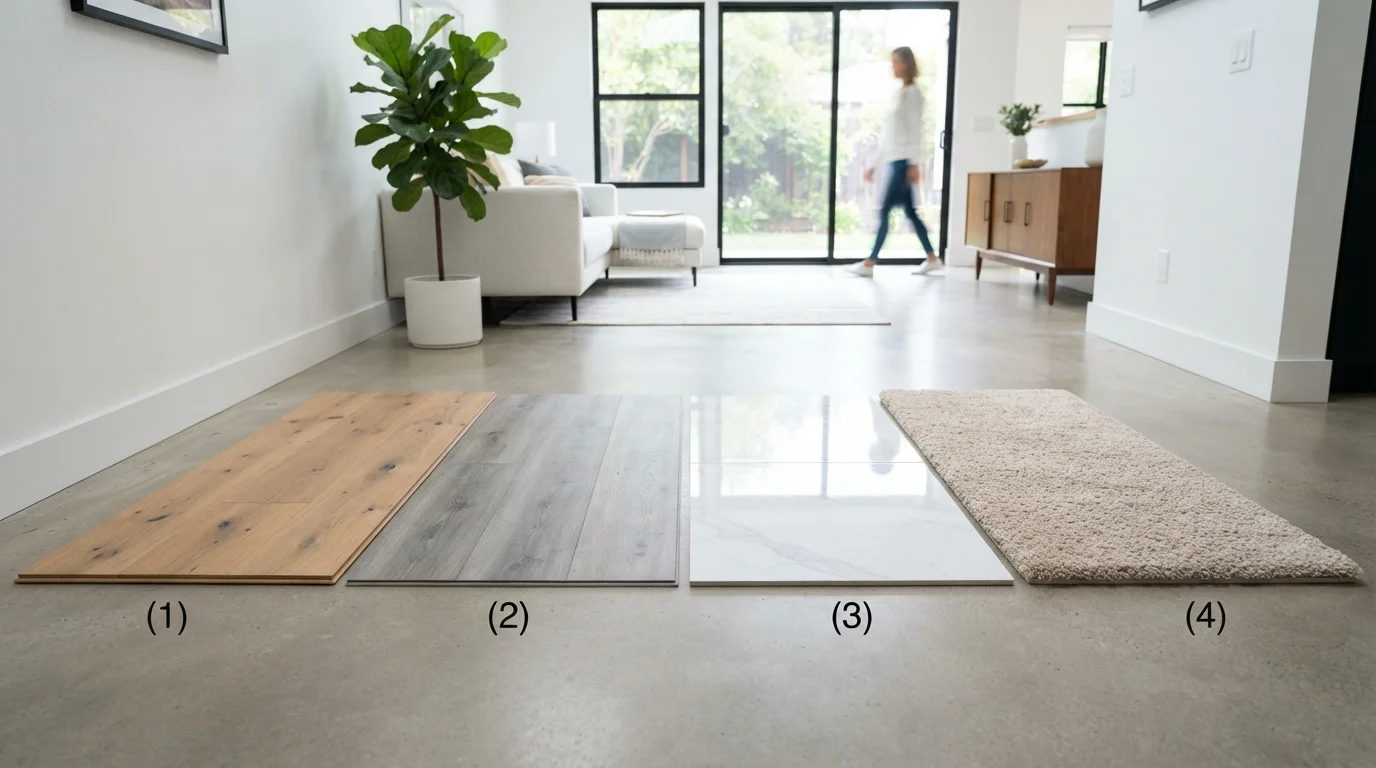
How These Four Flooring Types Stack Up
Choosing flooring is one of the most consequential decisions in any home improvement project — it affects how a room looks, feels, sounds, and holds up over years of use. The four most common options American homeowners encounter are hardwood, luxury vinyl plank (LVP), ceramic or porcelain tile, and carpet. Each has a distinct performance profile, and understanding those differences prevents costly mismatches between material and room.
Before diving into specifics, it helps to think about four key factors: durability, moisture resistance, maintenance requirements, and comfort underfoot. Just as paint finish choices depend on the room's function — something explored in our guide to paint finish types — flooring decisions should follow the same logic: match material properties to how a space actually gets used.
| Hardwood | LVP | Tile | Carpet | |
|---|---|---|---|---|
| Water Resistance | Low–moderate | Excellent (100% waterproof) | Excellent | Poor |
| Durability / Lifespan | 50+ years (refinishable) | 10–25 years | 20–50+ years | 8–15 years |
| Comfort Underfoot | Moderate | Moderate | Low (hard, cold) | High (soft, warm) |
| Maintenance Level | Moderate | Low | Low–moderate | High |
| Best Rooms | Living rooms, bedrooms | Any room, including wet areas | Baths, kitchens, entryways | Bedrooms, home offices |
| DIY-Friendly | Moderate (nail-down) | High (click-lock) | Low (labor-intensive) | Moderate (stretch-in) |
| Refinishable | Yes | No | No (grout resealing only) | No |
Hardwood: Timeless Appeal With Real Demands
Solid hardwood and engineered hardwood are prized for their warmth, authenticity, and resale appeal. Solid hardwood can be sanded and refinished multiple times over decades, which extends its lifespan considerably. Engineered hardwood — a real-wood veneer over a plywood core — handles minor humidity swings better than solid planks but still isn't waterproof.
The critical limitation of hardwood is moisture sensitivity. Kitchens, bathrooms, and basements are generally poor fits unless the product is specifically engineered for below-grade or high-humidity use. In climate-controlled living rooms, dining rooms, and bedrooms, hardwood performs well and tends to hold or add home value over time.
Acclimate Before You Install
Both hardwood and LVP should be left in the room where they'll be installed for 48–72 hours before installation. This allows the material to adjust to the room's temperature and humidity, reducing the risk of buckling, gapping, or warping after the floor goes down. Always follow the specific manufacturer's acclimation instructions for the product you've chosen.
Maintenance involves regular sweeping, occasional damp mopping with a flooring-appropriate cleaner, and refinishing every seven to ten years depending on traffic. Scratches and dents are the everyday enemy — felt pads under furniture legs go a long way.
Luxury Vinyl Plank: The Practical All-Rounder
LVP has become the dominant mid-range flooring choice for good reason. It's 100% waterproof, highly resistant to scratches and dents, and installs via a floating click-lock system that most motivated DIYers can handle without professional help. It can go in basements, bathrooms, kitchens, and high-traffic hallways where hardwood would be risky.
The trade-off is that LVP cannot be refinished — once the wear layer is worn through, the floor needs replacing. Thicker wear layers (measured in mils) extend the product's lifespan. LVP also doesn't add the same resale cachet as genuine hardwood, though buyer attitudes vary by market. Temperature extremes can cause expansion and contraction, so proper acclimation and installation gaps around the room's perimeter matter.
For households with pets, young children, or frequent spills, LVP typically delivers the best balance of resilience and practicality at a mid-range investment level.
Tile: The Moisture Master With a Hard Edge
Ceramic and porcelain tile are the undisputed choice for wet zones. Porcelain, being denser and less porous than ceramic, handles standing water, humidity, and freeze-thaw cycles particularly well — making it a common choice for bathrooms, entryways, and laundry rooms. Properly sealed grout joints are essential to maintaining that moisture resistance; our guide to grout, caulk, and sealant explains how these materials work together to protect tile installations.
Tile's drawbacks are well known: it's hard and cold underfoot, which can be uncomfortable in spaces where people stand for long periods. Radiant floor heating systems can offset the cold-floor issue but add cost and complexity. Tile is also unforgiving of subfloor flex — an insufficiently rigid subfloor leads to cracked grout and eventually cracked tile. Installation is labor-intensive and typically warrants professional help for large or complex areas.
Tile Requires a Rigid, Stable Subfloor
Installing tile over a subfloor that flexes — even slightly — will cause grout joints to crack and tiles to loosen over time. Before tiling, verify that the subfloor meets the deflection standards required for tile installation (commonly expressed as L/360). In many cases, adding a layer of cement backer board or uncoupling membrane is necessary. Skipping this step is one of the most common and costly tile installation mistakes.
Carpet: Comfort First, Maintenance Second
Carpet remains the softest, quietest, and most affordable-to-install option for bedrooms and low-traffic spaces. It provides thermal insulation, reduces noise transmission between floors, and creates a comfortable surface for children's play areas. Fiber type — nylon, polyester, and wool being the most common — significantly affects durability and stain resistance.
The maintenance demands are higher than hard surfaces. Carpet traps dust, pet dander, and allergens, requiring regular vacuuming and periodic professional cleaning to maintain air quality and appearance. It stains more readily than any hard surface, and high-moisture environments will cause mold and odor issues over time. Most carpet carries a lifespan of roughly eight to fifteen years under normal residential use, after which it typically needs full replacement rather than repair.
For allergy-prone households or rooms subject to spills and heavy traffic, carpet is often better reserved for sleeping areas and home offices where comfort and acoustics matter most.