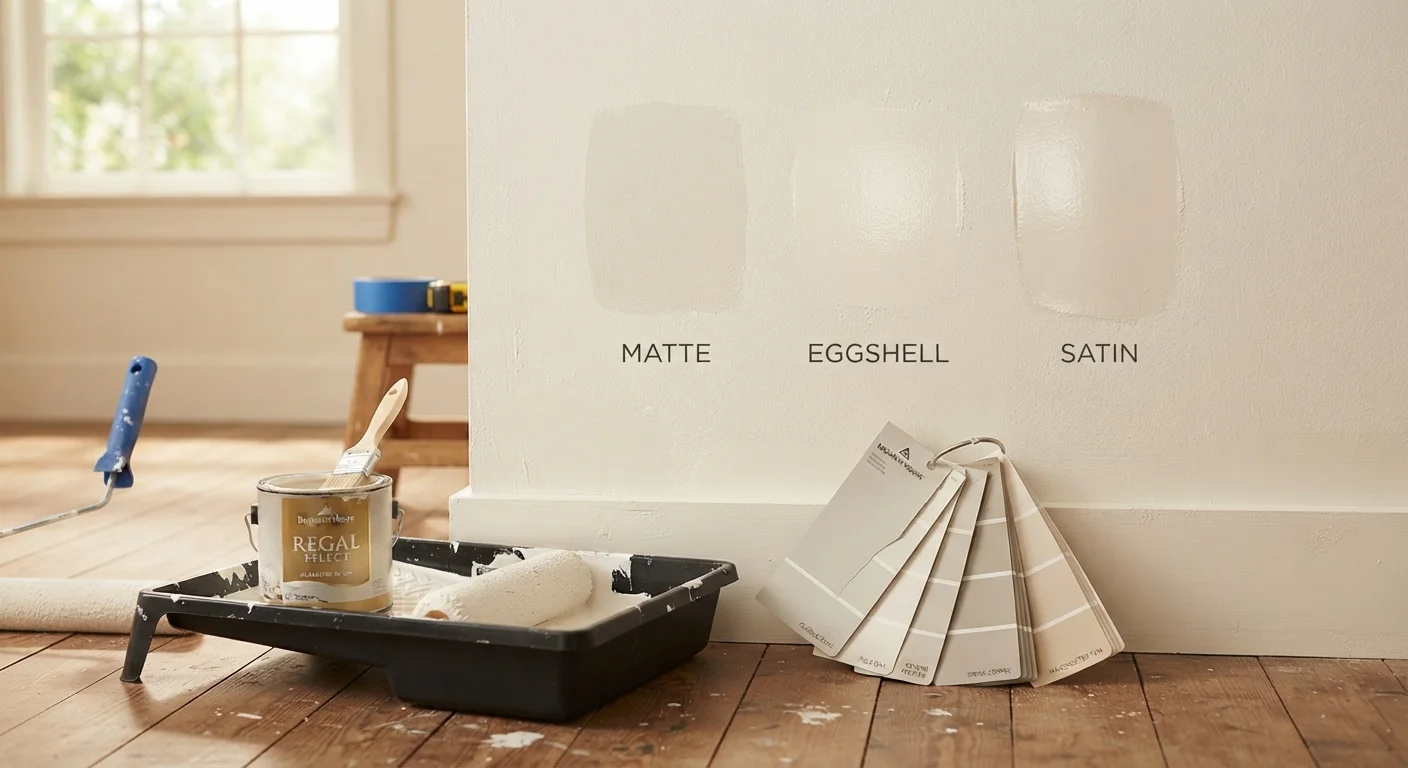
Why Sheen Level Matters More Than You Think
Most homeowners spend significant time picking a paint color, then grab whatever finish is on the shelf. That's a costly shortcut. Sheen level — the degree of light reflectance in the dried paint — directly affects how durable, washable, and visually forgiving a surface will be once the job is done.
Higher-sheen paints reflect more light, which makes them easier to wipe clean but also more likely to highlight surface imperfections. Lower-sheen paints absorb light and are more forgiving on uneven walls, but they're harder to clean and less moisture-resistant. Matching the right finish to the right room means your paint job will actually hold up — not just look good on day one.
| Finish types available | 5 (flat, eggshell, satin, semi-gloss, high-gloss) |
| Best finish for ceilings | Flat / Matte |
| Best finish for kitchens & baths | Semi-Gloss |
| Most versatile interior wall finish | Eggshell or Satin |
| Most durable finish | High-Gloss |
| Finish that hides imperfections best | Flat / Matte |
The Five Main Finish Types, Explained
Understanding each finish level helps you make confident decisions without guesswork.
Flat / Matte
The lowest sheen level, with little to no light reflectance. Best for hiding surface imperfections, but the least washable and most vulnerable to moisture damage.
Eggshell
A very slight sheen, similar to the surface of an eggshell. More washable than flat, and one of the most commonly used finishes for interior walls in living areas.
Satin
A smooth, velvety sheen that is noticeably more reflective than eggshell. Resists moisture and mild scrubbing, making it a strong choice for busy or kid-friendly rooms.
Semi-Gloss
A clearly reflective finish with good moisture and stain resistance. Standard for kitchens, bathrooms, and trim work throughout most homes.
High-Gloss
The most reflective finish available. Extremely durable and washable, but it magnifies any surface flaws, requiring thorough prep work before application.
Sheen / Light Reflectance Value (LRV)
A measure of how much light a dried paint surface reflects. Higher sheen means more reflectance, more durability, and more visibility of imperfections.
Just as material selection matters enormously for flooring — see our room-by-room flooring comparison — the same principle applies to paint: the right choice depends on the surface, not just the look.
Room-by-Room Placement Guide
Here's where each finish actually belongs in a typical home:
- Flat/Matte: Ceilings and low-traffic adult bedrooms. Hides roller texture and minor drywall repairs exceptionally well. Avoid in rooms where kids or pets create frequent wall contact.
- Eggshell: Living rooms, dining rooms, and master bedrooms. Offers a soft, subtle glow and is moderately washable — a versatile everyday choice for most interior walls.
- Satin: Hallways, children's bedrooms, laundry rooms, and family rooms. Holds up to regular cleaning and light scrubbing, making it practical wherever daily wear is a factor.
- Semi-Gloss: Kitchens, bathrooms, trim, doors, and window frames. Moisture-resistant and easy to wipe down; the reflective surface helps cabinets and trim pop visually.
- High-Gloss: Furniture, built-ins, exterior doors, and accent millwork. Extremely durable and washable, but unforgiving — surface prep must be thorough before applying.
Primers and Finish Sheen Work Together
The sheen you see on your wall is partly a product of proper priming. Skipping primer — especially on new drywall, repaired patches, or previously dark colors — can cause uneven sheen called 'flashing,' where sections appear dull or blotchy. Always prime before applying any finish to achieve consistent, true results.
For surfaces that interface with moisture or sealants — such as around a tub or sink — also review our guide to grout, caulk, and sealant to ensure every material in the room is doing its proper job.
3+
Finish types commonly used in a single home
Most homes benefit from different sheens on walls, trim, and ceilings — even within the same room.
~2×
Cleaning durability of satin vs. flat paint
Industry paint guidelines consistently note that higher-sheen finishes withstand scrubbing and moisture significantly better than flat formulas.
Common Mistakes and How to Avoid Them
Even experienced DIYers fall into predictable traps when choosing paint finishes. Here are the most common ones:
- Using flat paint in a bathroom. Flat paint has no moisture resistance. In high-humidity spaces it can absorb steam, leading to mildew growth and paint failure within months.
- Using high-gloss on walls with imperfections. Every ding, patch, and roller mark will be amplified. Reserve gloss finishes for smooth, properly primed surfaces.
- Assuming one finish works everywhere. It's common — and sensible — to use two or three different sheens throughout a home. Walls, trim, and ceilings often warrant different finishes in the same room.
- Skipping primer on new drywall. Without primer, even a quality finish won't adhere properly or deliver its expected sheen level.
Taking time to match finish to function will save you the frustration of repainting sooner than expected — and it costs nothing extra beyond the thought.