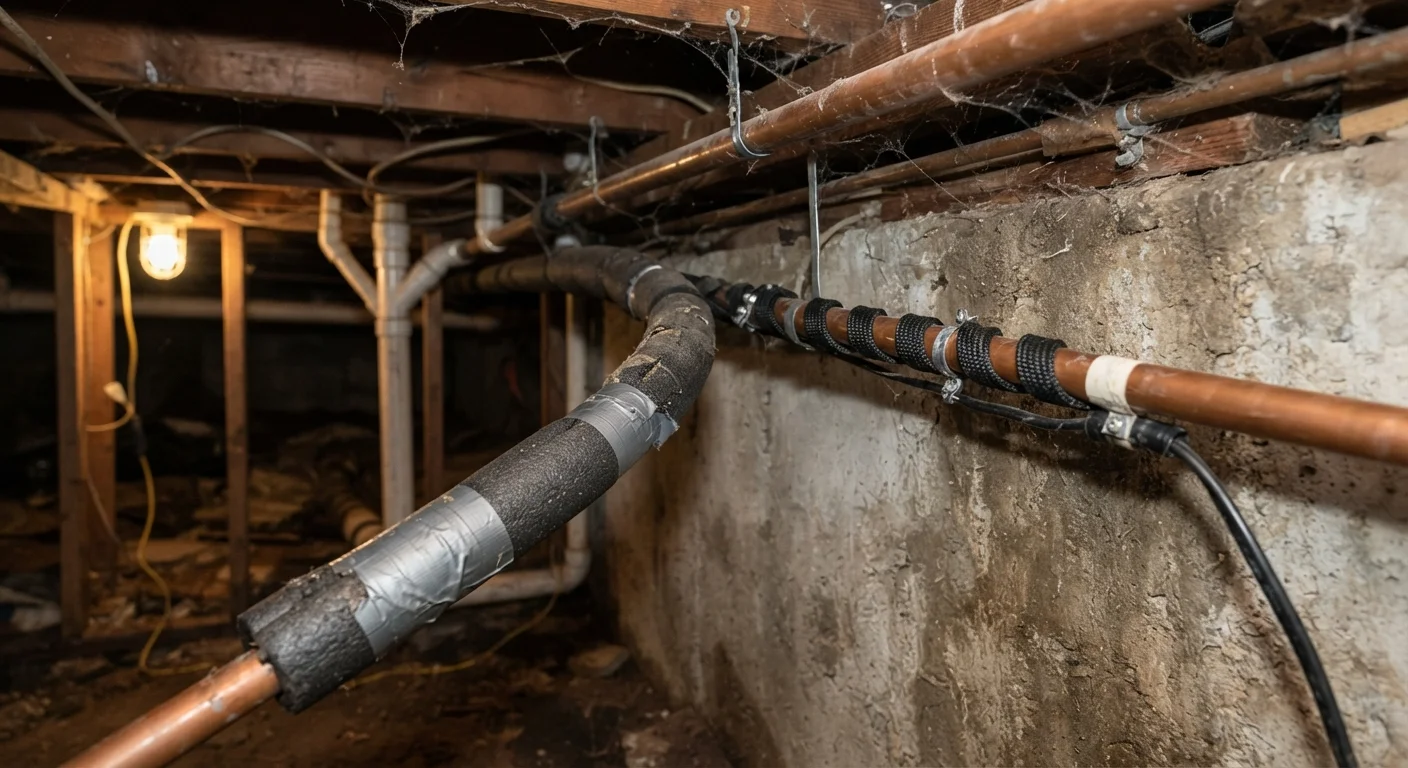
How Each Method Works
Understanding the mechanism behind each solution helps you make the right call for your specific situation.
Pipe insulation is a passive product — typically a foam, fiberglass, or rubber sleeve that wraps around your pipe and reduces how quickly heat escapes into the surrounding cold air. It doesn't add heat; it conserves the heat already present in the water moving through the pipe. Standard foam pipe sleeves are slit lengthwise, making them easy to snap onto existing pipes without cutting water supply. Foam insulation is rated by wall thickness: thicker walls slow heat loss more effectively.
Heat tape (sometimes called heat cable or pipe heating cable) is an active, electrical solution. It consists of a resistive cable wrapped around or run alongside the pipe, connected to an electrical outlet. When temperatures drop, the cable warms the pipe surface directly. Many modern products include a built-in thermostat that automatically switches on only when the temperature falls to a dangerous range, reducing energy use and lowering fire risk compared to older constant-current designs.
| Criterion | Pipe Insulation | Heat Tape |
|---|---|---|
| How it works | Passive — slows heat loss | Active — adds heat electrically |
| Upfront cost | Very low | Moderate |
| Ongoing cost | None | Electricity use each season |
| Installation difficulty | Very easy — no tools required | Moderate — needs grounded outlet |
| Best temperature range | Mild cold (above ~20°F) | Sustained or severe freezing |
| Maintenance required | Minimal; inspect for damage | Annual inspection before season |
| Fire risk | None | Low if installed correctly; real if misused |
| Renter-friendly | Yes — removable, no electricity | Check lease; electrical connection needed |
For a broader look at how cold affects systems throughout your home and beyond, see our guide to insulation options for existing homes.
Cost, Installation, and Ongoing Effort
For most homeowners, cost and ease of installation are deciding factors.
Foam pipe insulation is among the most affordable home maintenance materials available — a six-foot sleeve for a standard half-inch pipe typically costs under a few dollars. Installation requires only a utility knife and a moment of your time. There are no ongoing operating costs and no electrical connections to worry about.
Heat tape costs more upfront and requires an accessible grounded outlet near the pipe. Installation is straightforward for self-adhesive or wrap-style cables, but it's important to follow manufacturer instructions precisely: overlapping the cable on itself or covering it with insulation in a way that traps heat can create a fire hazard. The product must also be inspected each season — look for fraying, kinks, or damaged connectors before use. There is an ongoing electricity cost, though thermostatically controlled cables keep this modest.
$5,000+
Average cost of a frozen pipe water damage claim
According to the Insurance Information Institute, water damage from freezing pipes is one of the most common and costly homeowner insurance claims in cold-climate states.
20°F
Temperature at which uninsulated pipes typically freeze
The American Red Cross notes that pipes exposed to temperatures at or below 20°F are at significant risk without some form of insulation or heating.
If you're addressing overall winter preparedness, the same principles that protect your pipes also apply to other cold-sensitive systems — including those in your vehicle. See our article on systems that suffer most in winter cold for a parallel look at cold-weather maintenance.
When to Use Both — and When to Call a Pro
The two methods aren't mutually exclusive. In pipes that run through a particularly exposed area — an unheated garage, a band joist on an exterior wall, or an outdoor well line — layering heat tape under a foam sleeve is a common and effective approach. The cable actively prevents freezing while the foam reduces heat loss, meaning the cable runs less frequently and lasts longer.
There are situations where DIY pipe protection reaches its limits. If your pipes run inside exterior walls with no access panel, if you're seeing repeated freezing despite insulation, or if the pipe routing requires opening walls or working near your main electrical panel, a licensed plumber or electrician should be consulted. Similarly, if you rent your home, speak with your landlord before installing heat tape — it involves a permanent electrical connection and may be subject to lease terms.
Heat Tape Safety: Read the Label
Not all heat tape products are rated for the same pipe types or installation positions. Some are designed for plastic pipe, others for metal only; some can be overlapped, many cannot. Always verify that the product is listed by a recognized testing laboratory (such as UL) and follow manufacturer instructions exactly. Improper installation is associated with house fires and is the primary reason heat tape should be inspected — not just assumed to work — at the start of every cold season.
Finally, neither insulation nor heat tape eliminates the value of addressing root causes. Sealing air leaks in crawl spaces and rim joists, improving attic insulation, and keeping cabinet doors open under sinks on exterior walls are all worthwhile steps that reduce how hard your pipes have to work to stay warm.