Why Retrofitting Insulation Is Different
Adding insulation to a home that's already standing presents constraints you simply don't face in new construction. Walls are closed, joists are hidden, and every square foot of material has to fit around existing wiring, plumbing, and framing — often without tearing anything apart. That's why understanding your options before buying materials matters so much.
Before choosing an insulation type, identify where your home is losing the most energy. Common weak points include the attic floor, exterior walls, rim joists (the framing that sits on top of your foundation), and basement walls. An energy audit — either a professional blower-door test or a careful DIY walkthrough — can help you prioritize. See how insulation fits into a broader efficiency strategy for sequencing advice.
Comparing Your Main Insulation Options
Each insulation type has strengths tied to specific locations and installation conditions. Here's how the four most common retrofit options stack up.
| Blown-In | Spray Foam | Rigid Foam Board | Batt | |
|---|---|---|---|---|
| Best location | Attics, enclosed walls | Rim joists, irregular gaps | Basement walls, crawl spaces | Open stud bays, attic floors |
| Typical R-value per inch | R-2.2 to R-3.8 | R-3.7 to R-6.5 | R-3.8 to R-6.5 | R-3.0 to R-4.3 |
| Air sealing ability | Moderate | Excellent | Good (with tape/adhesive) | Poor |
| DIY-friendly | Yes (attic) | No — professional recommended | Moderate | Yes (open areas only) |
| Moisture resistance | Moderate | High (closed-cell) | High | Low to moderate |
| Relative cost | Low to moderate | Moderate to high | Moderate | Low |
Keep in mind that R-value requirements vary by climate zone and location within the home. The U.S. Department of Energy publishes recommended R-values by region — check those guidelines before purchasing.
Blown-In Insulation: The Retrofit Workhorse
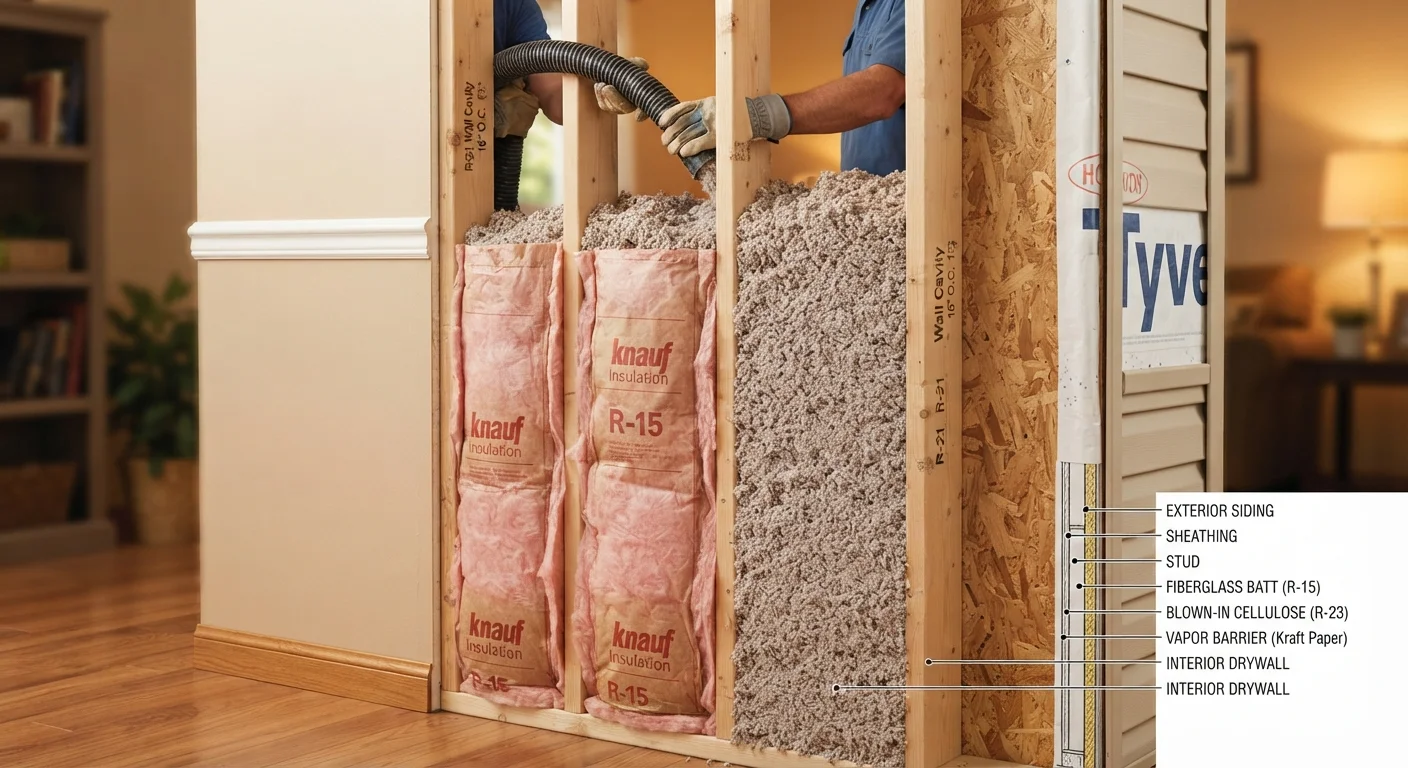
Blown-in insulation — available in fiberglass or cellulose — is the most versatile option for existing homes. In attics, it can be layered over existing insulation quickly and inexpensively. In walls, a technique called dense-pack allows installers to drill small holes in the exterior or interior surface, inject material under pressure, and then patch the holes — avoiding drywall demolition entirely.
Cellulose (made from recycled paper) is treated for fire and pest resistance and performs well at filling irregular cavities. Fiberglass blown-in is lighter and moisture-resistant. Both require a blowing machine, which most equipment-rental shops carry, making attic work a realistic DIY project for confident homeowners.
Getting More from Attic Blown-In
Before blowing in new material, air-seal any gaps around light fixtures, plumbing penetrations, and top plates with caulk or canned spray foam. Insulation slows heat transfer, but it won't stop air movement through gaps. Sealing first then insulating is the most cost-effective sequence.
Spray Foam, Rigid Board, and Batt Insulation
Spray foam comes in two forms: open-cell (softer, lower density, lower cost) and closed-cell (dense, rigid, moisture-resistant, higher R-value per inch). Closed-cell spray foam is especially effective at rim joists — those short band boards around the perimeter of your foundation — where air leakage is common and space is tight. Because improper application creates safety hazards and adhesion problems, most spray foam work is best left to licensed professionals.
Rigid foam board (polyisocyanurate, XPS, or EPS) is cut to fit and fastened directly to surfaces, making it practical for unfinished basement walls and crawl spaces. It resists moisture and doesn't require a vapor barrier in many climates, though local codes vary — always verify requirements with your municipality.
Batt insulation (fiberglass or mineral wool rolls) is the familiar pink or yellow material sold at home centers. While it's easy to install in open stud bays during a renovation, it's rarely practical in a finished existing home unless you're already opening walls. It does work well in an unfinished basement ceiling or during an attic renovation.
Watch for Old Insulation Hazards
Homes built before the 1980s may contain asbestos in older insulation materials (particularly vermiculite or certain loose-fill products) or have knob-and-tube wiring that shouldn't be buried under new insulation. If you're unsure what's already in your walls or attic, have a qualified inspector assess conditions before proceeding.
Don't overlook smaller air-leakage points alongside your insulation project. Pairing insulation with proper weatherstripping around doors and windows and pipe insulation in cold zones closes gaps that bulk insulation alone can't address.
Making the Right Call for Your Home
Most existing homes benefit from a layered approach: blown-in in the attic, spray foam or rigid board at the rim joist and foundation, and dense-pack in exterior walls if budget allows. Prioritize the attic first — it typically delivers the most impact per dollar because heat rises and escapes readily through an under-insulated ceiling.
For any work involving electrical wiring, gas lines, or structural elements, consult a qualified contractor. Permits may be required depending on your jurisdiction and the scope of work. A licensed insulation contractor or building performance specialist can assess your specific home and recommend a plan that meets local energy codes.