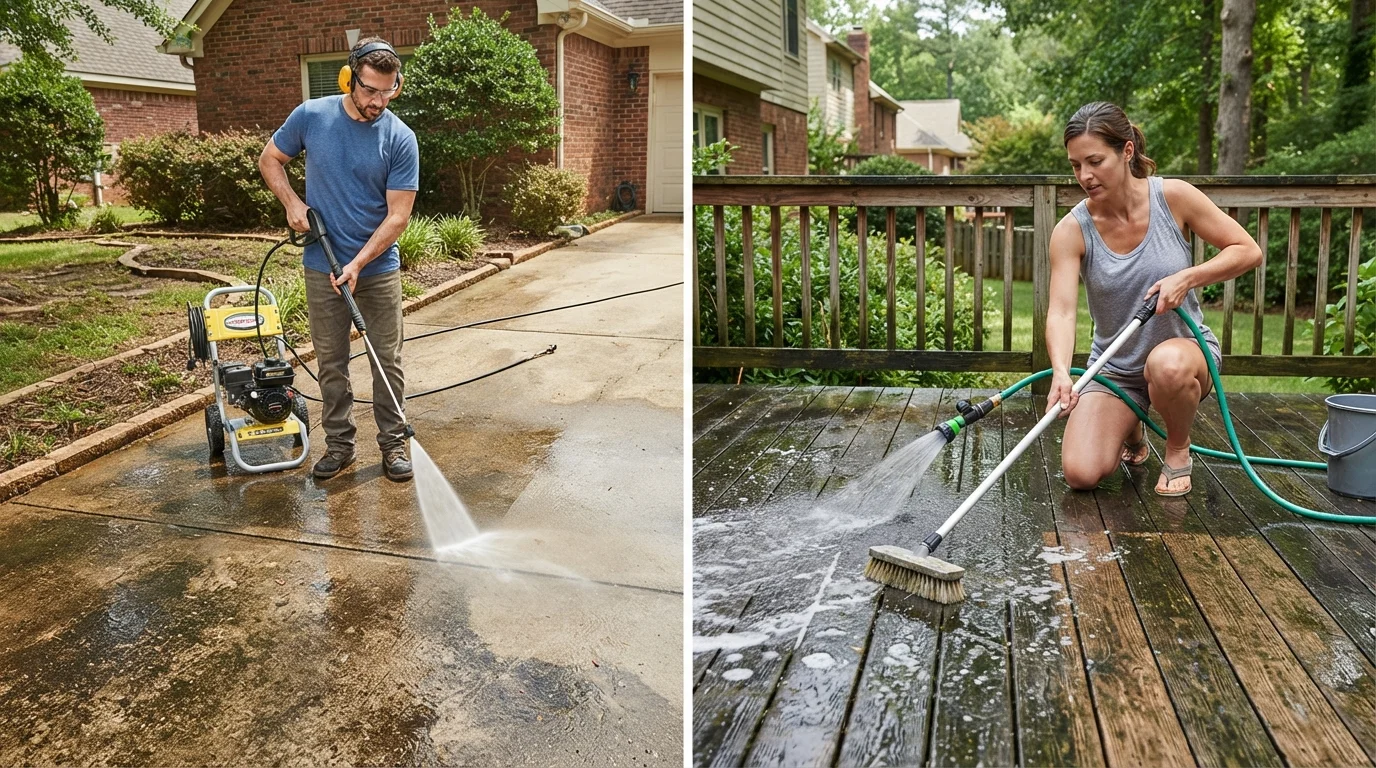
How Each Method Works
Understanding what each approach actually does helps you choose the right one before you start.
Pressure washing uses a motorized pump to force water through a narrow nozzle at high pressure — typically 1,300 to 3,000 PSI (pounds per square inch) for residential units. That pressurized stream blasts away mold, mildew, oil stains, and embedded grime that ordinary water can't dislodge. Electric models are quieter and easier to manage; gas-powered units produce more force for larger jobs.
Garden hose scrubbing combines normal water flow (roughly 40–60 PSI at the tap) with physical agitation from a brush, sponge, or scrub pad. A spray nozzle attachment can boost the rinse, but the real cleaning power comes from the friction of scrubbing rather than water pressure alone. Adding a household cleaner or deck wash solution can significantly improve results.
Surface-by-Surface Breakdown
The same cleaning method that restores a concrete driveway can splinter soft wood or crack grout. Always match the method to the material.
| Criterion | Pressure Washing | Garden Hose Scrubbing | |
|---|---|---|---|
| Cleaning power | High — removes embedded grime and stains | Moderate — relies on manual agitation | |
| Risk of surface damage | Higher if used incorrectly | Low on most surfaces | |
| Equipment cost | Moderate to high (own or rent) | Minimal — hose and brush | |
| Speed on large areas | Fast | Slow to moderate | |
| Best surface types | Concrete, brick, pavers | Wood, painted surfaces, siding | |
| Skill required | Some — nozzle selection matters | Minimal |
Concrete and Brick
These hard, dense surfaces handle high pressure well. Pressure washing is genuinely more effective here — it removes years of grime, moss, and oil stains in a fraction of the time scrubbing would take. Use a wide-angle nozzle (25–40°) and keep the wand moving to avoid etching.
Wood Decks and Fences
Wood requires caution. Excessive pressure can raise wood grain, drive moisture deep into the material, and strip protective finishes. A garden hose with a soft-bristle brush and an appropriate wood cleaner is often the safer default. If you use a pressure washer on wood, keep pressure below 1,500 PSI, use a wide-angle nozzle, and always spray with the grain.
Vinyl and Composite Siding
Both methods can work, but pressure washing from too close or at too steep an angle can force water behind siding panels, potentially causing moisture damage inside walls. A low-pressure rinse (under 1,500 PSI) from a distance, or a hose with a soft brush, is generally more appropriate for regular maintenance.
Stucco and Painted Surfaces
These surfaces are particularly vulnerable. High pressure can chip paint, crack stucco, or dislodge textured coatings. Garden hose scrubbing with a gentle cleaner is the recommended approach unless the surface is in excellent condition and a low-pressure setting is used.
Practical Considerations: Cost, Effort, and Risk
Test Before You Commit
Before applying either method to a full surface, test a small, inconspicuous area first. This is especially important with older paint, weathered wood, or stucco. A two-minute test patch can reveal how the surface responds before you've committed to cleaning the whole thing.
Beyond surface compatibility, a few practical factors should shape your decision.
- Equipment access: A garden hose is already on hand for most homeowners and renters. Pressure washers can be rented from hardware and equipment rental stores if you don't own one, but that adds planning time and cost.
- Water use: Pressure washers use water more efficiently per square foot of cleaning because the force does more work. However, a long scrubbing session with a running hose can also consume significant water.
- Physical effort: Scrubbing large areas by hand is time-consuming and tiring. Pressure washing covers ground faster, though the equipment itself requires handling and safe positioning.
- Safety: High-pressure water streams can cause serious injury to skin and eyes. Always wear eye protection when pressure washing, never point the wand at people or animals, and be cautious on ladders — the kickback from a pressure washer wand on an elevated surface is a genuine fall risk.
For a broader framework on deciding when DIY cleaning is appropriate versus calling in help, see our guide to DIY vs. hiring a contractor.
When to Choose Each Method
Use this as a starting-point checklist rather than a rigid rule — your specific surface condition and comfort level matter.
Choose pressure washing when:
- You're cleaning concrete, brick, or pavers with heavy staining or biological growth
- The surface is in good structural condition and can handle high pressure
- You need to cover a large area efficiently
- You have experience operating a pressure washer or are willing to read the equipment guidelines carefully
Choose garden hose scrubbing when:
- You're doing routine seasonal maintenance rather than deep restoration
- The surface is painted, delicate, or older with questionable structural integrity
- You don't have access to a pressure washer and the grime level doesn't justify renting one
- You're a renter with surface warranty or lease restrictions to consider
If you're also thinking about water efficiency across your outdoor spaces, our look at drip irrigation trade-offs offers useful context on managing water use in the yard more broadly.
1,300–3,000 PSI
Typical residential pressure washer range
Most household surfaces require no more than 1,500 PSI; using higher settings on soft materials increases damage risk.
40–60 PSI
Standard garden hose water pressure
Standard municipal water supply delivers this pressure at the tap, making physical scrubbing essential for effective cleaning.