Why the Gap Exists — and Why It Matters
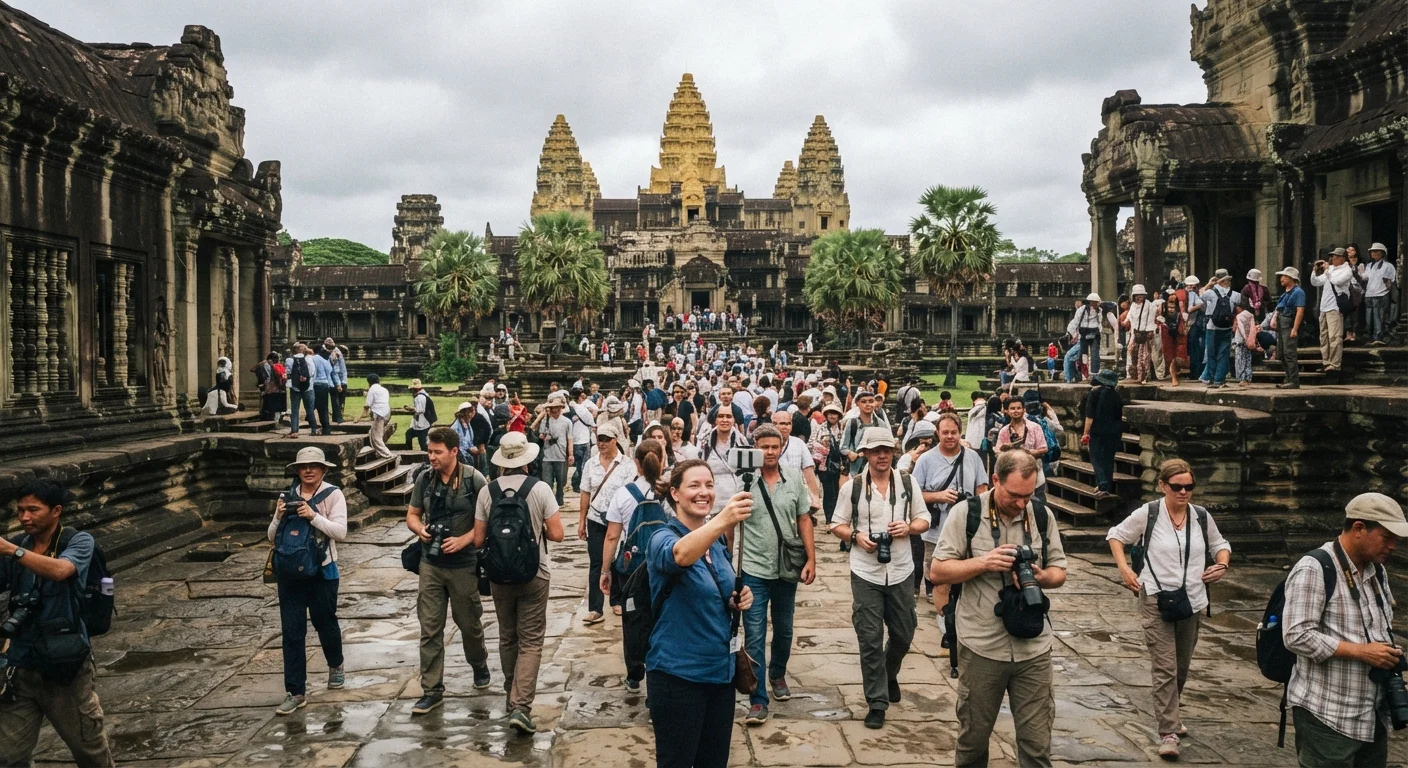
Social media has fundamentally reshaped how travelers preview destinations. A single stunning photograph of Angkor Wat at sunrise, framed without a soul in sight, can drive thousands of bookings — but capturing that image often required arriving at 4:30 a.m., positioning carefully to exclude surrounding crowds, and editing out the tour group standing ten feet away. The photograph isn't dishonest, exactly, but it omits almost everything a first-time visitor actually needs to know.
Understanding this gap isn't about lowering expectations or dismissing genuinely beautiful places. It's about arriving prepared. Travelers who know what they're walking into tend to adapt quickly, find alternative vantage points, and leave satisfied. Those who arrive expecting an empty paradise frequently feel cheated by the very destination they'd been dreaming about for years. For a broader look at how timing shapes your on-the-ground experience, see our guide to planning around seasons and crowds.
Myth
You can easily get a solo, crowd-free shot at Angkor Wat by arriving at sunrise.
Fact
Sunrise at Angkor Wat draws hundreds of visitors daily; the reflection pools and main causeway are among the most crowded spots on the entire site.
Sunrise timing is widely published in every guidebook and travel blog, which means it's no longer a secret. Arriving at 5 a.m. puts you in a queue alongside tour buses, photography groups, and independent travelers who all had the same idea. The reflecting pool in front of the main temple — the most-photographed angle — is typically lined several people deep before light breaks. Shoulder-season visits and alternative temples within the park (such as Ta Prohm or Banteay Srei) tend to offer more breathing room, though none are truly empty during the high season.
Myth
Maya Bay in Thailand looks exactly like it did in travel photographs — pristine, turquoise, and mostly empty.
Fact
Maya Bay was closed to visitors for several years for ecological rehabilitation and now operates under strict visitor caps and time-limited access.
The bay became so overwhelmed by tourism that Thai authorities closed it entirely for rehabilitation, reopening later with tighter regulations on visitor numbers and boat access. Even during permitted visiting hours, the experience is managed and time-limited — not the free-roaming, linger-as-long-as-you-like scene that circulates online. The water has recovered significantly, which is genuinely good news, but travelers should verify current access rules with official Thai National Park sources before planning a visit, as policies continue to evolve.
Myth
Ha Long Bay offers peaceful, isolated cruising through dramatic limestone scenery.
Fact
During peak season, the bay sees heavy boat traffic, and many vessels cluster at the same viewpoints and cave entrances simultaneously.
Ha Long Bay's UNESCO status and natural drama are real — the karst formations are legitimately spectacular. But the cruise experience varies enormously depending on which section of the bay you access, what time of year you visit, and how far the itinerary ventures from the main tourist corridors. The busiest areas near popular caves can feel more like a floating traffic jam than a serene wilderness. Lan Ha Bay and Bai Tu Long Bay are less visited alternatives that offer similar scenery with considerably fewer boats, though traveler accounts on both change frequently as word spreads.
Myth
Bali's famous rice terraces are unspoiled and offer a quiet, rural escape.
Fact
Tegallalang and other well-known terrace areas have developed extensive commercial infrastructure, including cafés, souvenir stalls, and ticketed viewpoints.
The terraces themselves remain beautiful and are genuinely maintained by local farming communities. But the viewing experience at the most-photographed spots now includes entrance fees, hawkers, and a dense cluster of Instagram-focused cafés that have built platforms and swings specifically for social media content. This isn't unique to Bali — it's a pattern visible across the region wherever a location goes viral. Travelers who venture to less-circulated terrace areas in the Jatiluwih region, for example, often report a noticeably different atmosphere, though the journey requires more planning and transport.
Myth
Luang Prabang's alms-giving ceremony (tak bat) is an authentic, undisturbed spiritual ritual visitors can quietly observe.
Fact
The ceremony has become heavily commercialized at its most visible locations, with tourists sometimes disrupting the procession itself.
Tak bat is a genuine, living religious practice — monks do walk through town each dawn to receive offerings from laypeople. But at the spots most visible to tourists, the experience is frequently crowded, loud with camera shutters, and occasionally interrupted by visitors who step into the procession for photographs. Lao government tourism bodies have issued guidelines asking visitors to observe respectfully from a distance and to avoid purchasing food to offer from vendors, whose commercially prepared items are considered inappropriate for the ritual. Travelers should approach this and similar ceremonies as observers, not participants, and follow guidance from local authorities and cultural organizations.
What Travelers Consistently Report When They Arrive
Across traveler forums, firsthand accounts share a set of recurring themes at Southeast Asia's most photographed destinations. Crowds are the most cited discrepancy — not just inconvenient crowds, but genuinely dense ones that limit movement, create noise, and make contemplative moments difficult to find. At Halong Bay, for example, many visitors describe the water as busy with tour boats during peak season, quite different from the serene limestone solitude typically shown online.
5M+
Annual visitors to Angkor Archaeological Park
Pre-pandemic visitor figures for the Angkor complex regularly exceeded five million annually, according to Cambodia's Ministry of Tourism.
Closed 2018–2021
Maya Bay rehabilitation closure period
Thai National Parks closed the bay entirely for ecosystem recovery, reopening with regulated access under new visitor management rules.
Access restrictions add another layer. Several temples in the Angkor Archaeological Park require dress codes, enforce timed entry for inner chambers, and limit photography in specific areas. Bagan's balloon-dotted sunrise — one of Myanmar's most shared images — requires significant advance booking and is weather-dependent, meaning many visitors never see it at all. Thailand's islands face similar realities; what looks like a secluded cove in a photograph may front a busy beach lined with vendors and long-tail boats. Our island-by-island breakdown for Thailand can help you match expectations to reality before you book.
Verify Entry Rules Before You Travel
Access policies, dress codes, ticketing systems, and photography restrictions at major Southeast Asian heritage sites change frequently. What was open or unrestricted when a travel blog was written may no longer apply. Always check with official national park or heritage authority sources — and your government's travel advisory — before finalizing plans. Our guide to reading a destination's safety landscape covers how to evaluate on-the-ground conditions beyond the highlight reel.
None of this means these destinations aren't worth visiting. It means the trip you plan should be grounded in what they actually offer — which is, in most cases, still genuinely remarkable.