What Dealers Are Actually Calculating
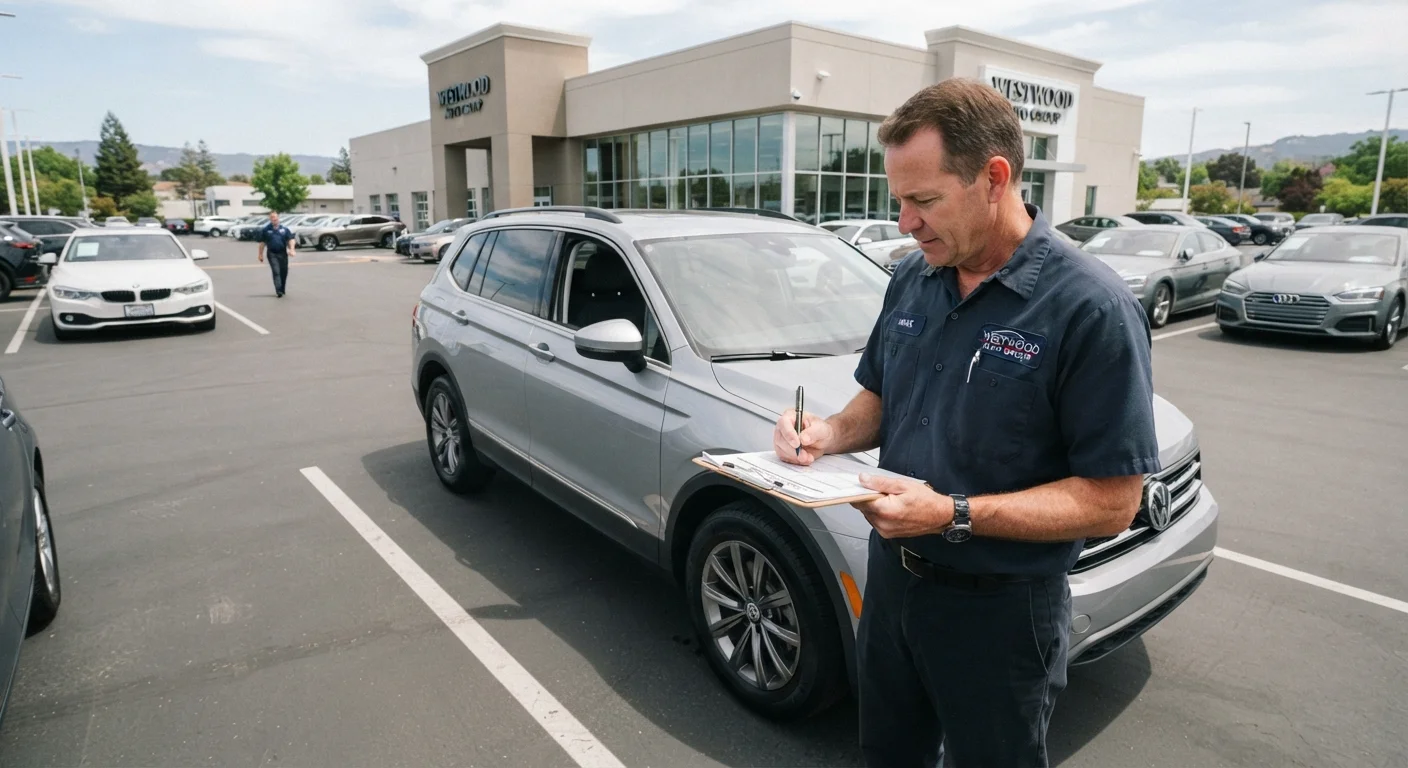
When a dealer appraises your trade-in, they are not simply looking up your car's value in a table. They are estimating what they can realistically net after taking the car through their process: inspection, any needed repairs or cosmetic work, reconditioning, and eventually a retail sale - or a wholesale auction if the vehicle doesn't fit their lot.
That means the appraisal reflects their costs and their market, not just your car's condition. A vehicle that needs $1,200 in reconditioning at one dealership's shop rates may cost $800 at another. A model that moves quickly off one dealer's lot may sit for weeks at another across town. Both of those realities show up directly in the number you're offered.
This is why understanding the process matters before you walk in. The offer isn't arbitrary - it's a business calculation - and knowing that gives you a framework for evaluating and negotiating it. For more context on how vehicle value works over time, see our article on common misconceptions about car depreciation.
$1,000-$3,000+
Typical spread in competing trade-in offers
Automotive consumer research consistently finds that trade-in offers for the same vehicle can differ by over $1,000 across dealers, with gaps exceeding $3,000 not uncommon in high-demand or high-value segments.
3+
Recommended number of appraisals to collect
Consumer automotive advisors generally recommend obtaining at least three independent appraisals to establish a credible value range before entering any trade-in negotiation.
11-15%
Reconditioning as share of trade-in cost
Industry estimates suggest dealerships commonly budget reconditioning costs equal to roughly 11-15% of a vehicle's expected retail resale price, which directly affects the trade-in offer extended to sellers.
The Factors That Move the Number Most
Beyond mileage and overall condition, several less-obvious factors shape what appraisers offer:
- Vehicle history: Accident reports, title issues (salvage, flood), and lien status all create risk for the dealer. A clean history report is one of the few things a seller can reliably present to support a higher offer.
- Service documentation: A logbook of oil changes, tire rotations, and major services signals reduced mechanical risk - particularly for higher-mileage vehicles.
- Local inventory supply: If a dealer is long on vehicles like yours, they'll price accordingly. A dealership actively seeking your segment may offer more to fill a gap on their lot.
- Current market conditions: Wholesale auction prices fluctuate. When used-car demand is elevated broadly, trade-in offers tend to follow. When supply is high and demand softens, the reverse is true.
- Trim level and options: Higher trim packages and popular option groups (towing packages, premium audio, advanced safety features) can support stronger appraisals in markets where buyers seek those configurations.
Understanding these levers helps you see why two dealers can look at the same car and reach different conclusions - and why your job is to find the dealer whose calculation currently favors your vehicle.
How to Use Valuation Variation Strategically
The spread in trade-in estimates is not a problem - it's an opportunity. Here's how to approach the process with that in mind:
- Get a baseline before any dealership visit. Online valuation tools from established automotive data sources provide a reasonable range. These won't match an in-person offer exactly, but they establish floor and ceiling expectations.
- Obtain at least two or three in-person appraisals. Competing dealers, standalone used-car buyers, and auction-adjacent services all use different models. The range you collect becomes your negotiating data.
- Keep the trade-in negotiation separate from the purchase price. Dealers can absorb a higher trade-in offer by adjusting the purchase price or financing terms elsewhere in the deal. Negotiate the vehicle purchase price first, then introduce the trade-in as a separate line item. Our article on what negotiating a car price actually looks like covers this structure in detail.
- Present your documentation proactively. A clean vehicle history report, recent service records, and receipts for any repairs or new tires are tangible evidence that can support your asking position.
Get Written Appraisals Before You Shop
When you walk into a dealership with a written appraisal from a competing source, you change the negotiating dynamic immediately. Most dealers will at minimum match or justify why their offer differs. Bring two competing written offers when possible - it signals that you've done your homework and reduces the information asymmetry that dealers typically hold in the trade-in process.
If you're also evaluating whether to buy new or used in your next vehicle, consider how the trade-in fits into that broader decision. See our overview of new car vs. used car considerations for a complete look at how financing, depreciation, and risk factor in.
What to Watch For in the Appraisal Process
Not all appraisal experiences are the same, and some practices are worth understanding before you sit down. The in-person inspection will typically cover mechanical condition, tire wear, interior condition, paint and body, and a scan of the vehicle's diagnostic system for stored fault codes. Any of these findings can be used to adjust - usually downward - from an initial online estimate.
This is normal and not necessarily adversarial. What matters is that you understand each adjustment being made. If a dealer references a specific repair cost, you can reasonably ask for that figure in writing or cross-check it against an independent mechanic's estimate.
It's also worth recognizing that a low trade-in offer doesn't automatically make a deal bad - if the purchase price is genuinely favorable, the overall transaction may still work in your favor. Evaluate the complete picture, not just one line in the deal. For a broader view of evaluating used-car value, our piece on signals that a used car deal may be too good to be true highlights how experienced buyers assess the full picture.
Trade-In Credit vs. Selling Privately
Selling your vehicle privately - through classified listings or peer-to-peer platforms - often yields a higher net return than a dealer trade-in, because you capture retail rather than wholesale value. However, private sales require more time, carry their own risks, and may complicate timing if you need immediate transportation. The trade-in convenience premium is real; the question is whether it's worth the difference in your specific situation.