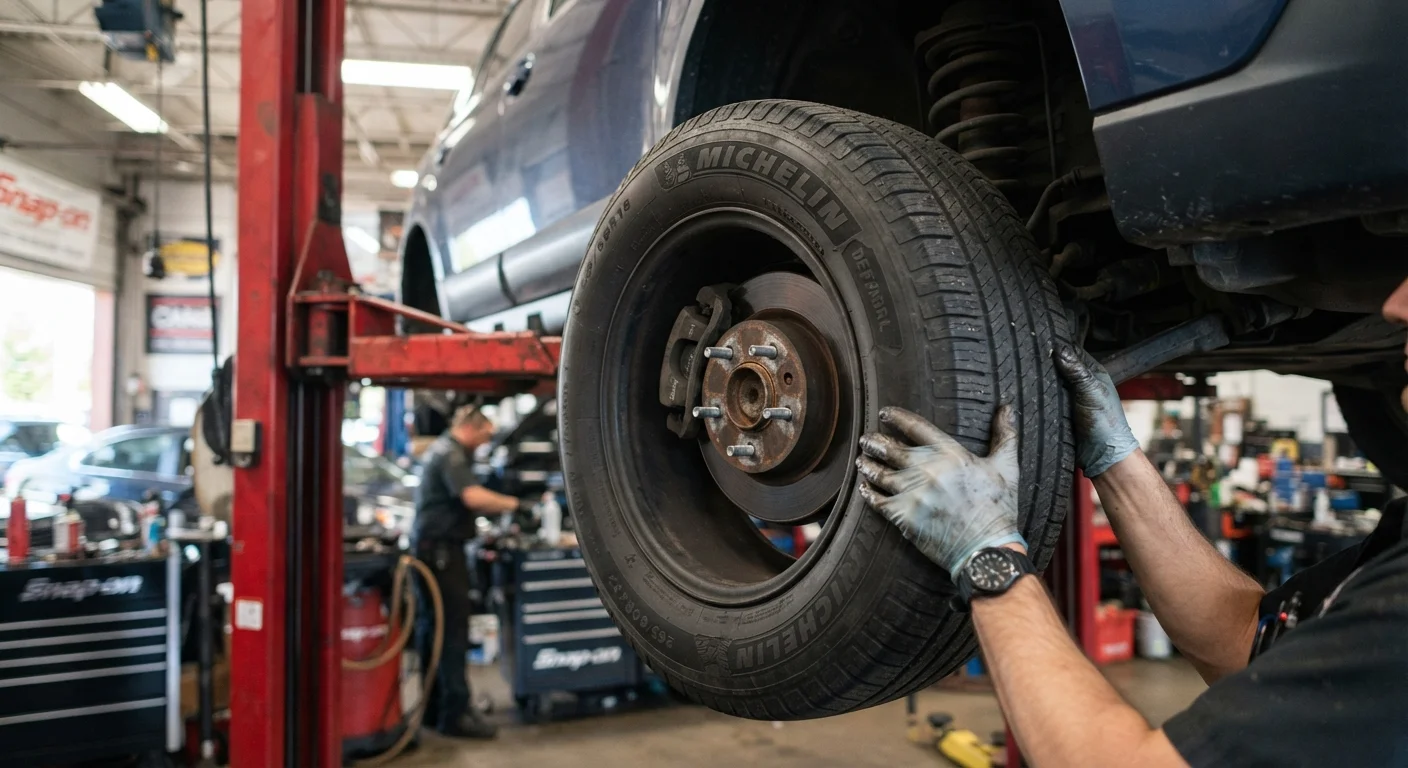
Why Tires Wear Unevenly in the First Place
Every tire on your vehicle does a slightly different job. On a front-wheel-drive car, the front tires handle acceleration, steering, and much of the braking load-all at once. That concentrated workload causes the front tires to lose tread significantly faster than the rears. On rear-wheel-drive vehicles, the pattern reverses but the imbalance is just as real.
Even on all-wheel-drive vehicles, weight distribution and how each axle delivers power create measurable differences in wear rates. Left and right tires can also wear differently depending on road camber and local driving patterns. The result, without intervention, is a mismatched set of tires at varying stages of wear-some dangerously thin while others still have life left.
Reading your tires' wear patterns can reveal alignment or pressure issues before they become costly problems.
~$150-$300
Estimated cost of a new tire vs. rotation service
A single tire replacement typically costs several times more than a rotation service, underscoring the cost-efficiency of routine upkeep.
Up to 20%
Potential increase in tire lifespan with regular rotation
Industry guidance from tire manufacturers commonly cites even wear as a key factor in maximizing tread life, with rotation cited as the primary tool.
5,000-7,500 mi
Commonly recommended tire rotation interval
This range reflects guidance from many vehicle and tire manufacturers; always verify with your specific owner's manual.
What Rotation Actually Does
Rotation redistributes the workload. By systematically moving tires to different positions-front to back, side to side, or diagonally depending on the approved pattern for your vehicle-you give heavily used tires a break and allow lightly worn tires to pick up some of the demand.
Over time, this equalization means all four tires reach a similar level of wear and can be replaced as a set. Replacing all four together is safer than mixing tires at very different tread depths, and it avoids the handling inconsistencies that come from mismatched grip levels.
Bundle Rotation With Your Oil Change
Scheduling tire rotation at the same time as an oil change is one of the easiest ways to stay consistent. Both services often fall within a similar mileage window, and combining them means one fewer trip to the shop. Ask your service provider if they offer both at the same appointment.
Consistent rotation also keeps tread depth even across the axles, which matters for vehicles with all-wheel-drive systems that are sensitive to diameter differences between tires.
How Often to Schedule Rotation
The most widely cited interval is every 5,000 to 7,500 miles, but your vehicle's owner's manual should always take precedence over general guidelines. Some manufacturers specify intervals as short as 3,000 miles for certain AWD models; others allow longer stretches.
A practical approach: bundle tire rotation with oil changes. Since oil change intervals often land in a similar mileage range, combining the services is convenient and easy to remember. Most tire shops and dealerships can perform a rotation quickly at the same visit.
If you notice uneven wear, vibration at highway speeds, or pulling to one side, don't wait for the next scheduled interval-have a mechanic inspect the tires sooner. These symptoms can indicate both a rotation need and a potential alignment issue. Skipping maintenance consistently has real financial consequences, as covered in our look at the hidden costs of missed service intervals.
Safety and Long-Term Value
Beyond cost savings, even tread depth directly affects safety. Tires with uniform wear maintain more consistent grip across all four corners of the vehicle, which improves wet-weather braking and cornering stability. A tire significantly more worn than its counterparts can reduce the predictability of your vehicle's handling-especially in an emergency maneuver.
Severely worn or neglected tires also carry a higher blowout risk. If you want to understand what to do if that happens at speed, our guide on tire blowouts at highway speed covers the critical steps. Tire rotation is part of a broader maintenance rhythm-one that also includes seasonal vehicle checks that keep your car roadworthy year-round.