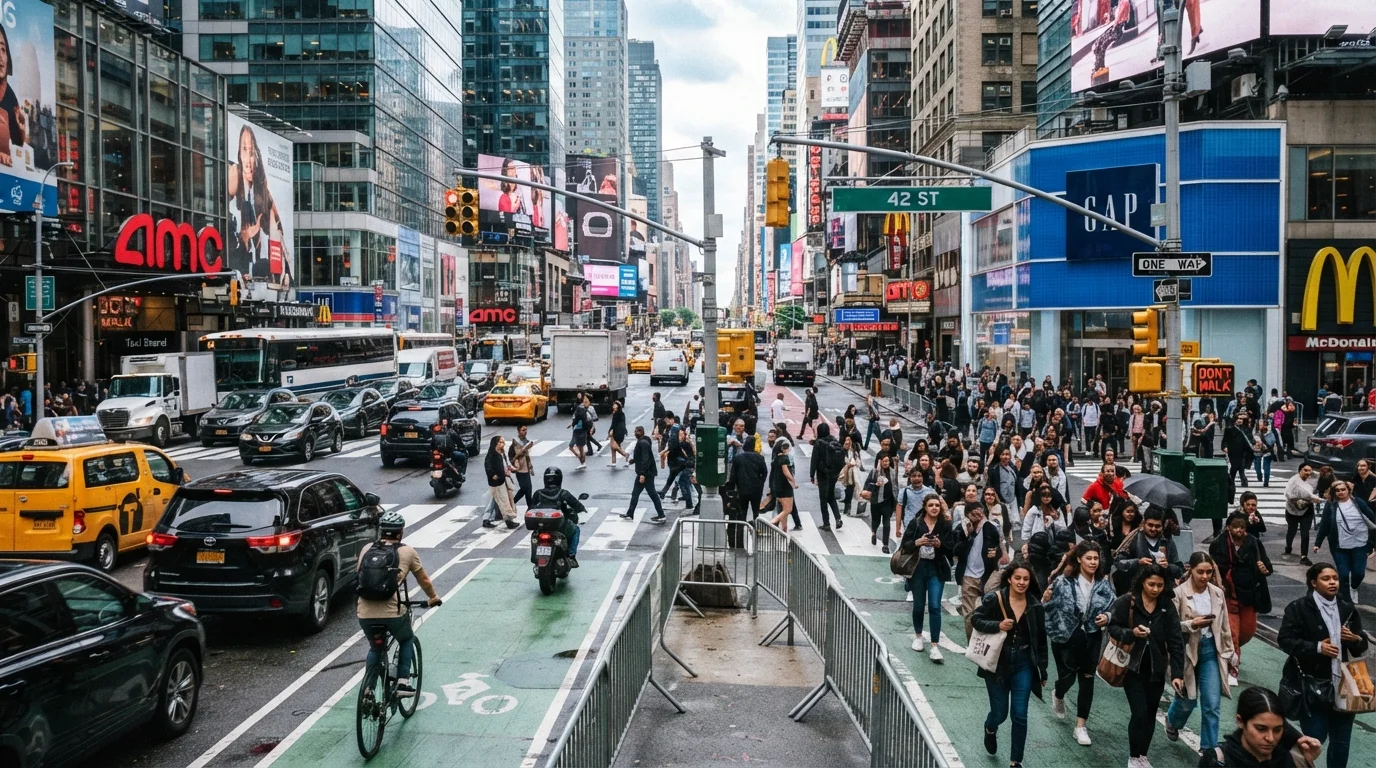
Why Urban Driving Is Uniquely Challenging
City driving is fundamentally different from highway travel. Speeds may be lower, but the density of hazards is far greater. In a single block, a driver may encounter double-parked delivery trucks, pedestrians stepping off curbs mid-block, cyclists filtering through traffic, transit buses pulling in and out, and traffic signals cycling rapidly. The cognitive load is high and sustained.
Unlike highway driving, where hazards tend to come from a limited range of directions and speeds are more predictable, urban environments are multi-directional and constantly shifting. A child can run between parked cars. A rideshare driver can brake without warning. Situational awareness - the ability to read the road environment and predict what others will do - is the single most important skill for urban drivers.
Managing Speed and Following Distance
Posted speed limits in cities are set with pedestrian and cyclist vulnerability in mind. At 20 mph, a pedestrian struck by a vehicle has a substantially higher chance of survival than at 40 mph. Obeying posted limits - and slowing further in school zones, near parks, and in congested areas - directly reduces the severity of any potential collision.
Following distance matters just as much. A two-to-three-second gap behind the vehicle in front gives you reaction time when that driver brakes unexpectedly. In wet or icy conditions, extend that buffer further. For practical guidance on adjusting your driving behavior in bad weather, see our article on driving in rain, fog, and snow.
Use the Two-Second Rule Consistently
To measure your following distance, pick a fixed object ahead - a sign or lamppost - and count the seconds after the vehicle in front passes it until you do. In city traffic, two to three seconds is the minimum; three to four seconds is better when traffic is heavy. This habit alone can prevent a significant number of rear-end collisions.
Intersections, Pedestrians, and Cyclists
Intersections are where the majority of urban collisions occur. Even when you have a green light, scan left and right before entering - red-light runners and pedestrians finishing a crossing are real and common hazards. Come to a complete stop at stop signs; rolling stops are both illegal and dangerous in pedestrian-dense areas.
Pedestrians have the right-of-way in marked crosswalks in all U.S. states, and in many unmarked crosswalks at intersections as well. When turning, always check for pedestrians completing a crossing before accelerating. Give cyclists at least three feet of clearance when passing, and never pass a cyclist then immediately turn right across their path - this maneuver, sometimes called a right hook, is a leading cause of cyclist fatalities.
Pedestrian Right-of-Way Is Non-Negotiable
In virtually every U.S. jurisdiction, pedestrians have a legal right-of-way in crosswalks, and failure to yield is both a traffic violation and a serious safety risk. Never block a crosswalk when stopped at a light, and never overtake a stopped vehicle at a crosswalk - they may be yielding to a pedestrian you cannot yet see.
Scanning, Anticipation, and Situational Awareness
Experienced urban drivers don't just react - they anticipate. This means reading the behavior of other road users well ahead of time. A person standing at a curb edge is likely preparing to cross. A bus with its hazard lights on will probably stop soon. A gap in parked cars near a school increases the chance a child will dash through.
Keep your eyes moving. Use a scanning pattern that checks mirrors every five to eight seconds, monitors the road 12-15 seconds ahead, and sweeps intersections before entering. This habit replaces the tunnel vision that develops under stress. Eliminate in-vehicle distractions completely - even a two-second glance at a phone covers significant ground in city traffic.
Watch the wheels of parked cars, not just the car itself - if front wheels start turning outward, that vehicle is about to pull into traffic, giving you a critical extra second to react.
Wheel movement is an earlier indicator of a driver's intent than any other visual cue, and is a technique taught in advanced driver training programs.
When stopped in traffic, keep enough space ahead to see the rear tires of the vehicle in front touching the pavement - this gives you maneuvering room if you need to pull around a stopped vehicle or avoid a rear-end impact from behind.
Being boxed in during a stop is a common source of secondary collisions and limits escape options in emergency situations.
Navigating Parking, Lane Changes, and Tight Spaces
Parking maneuvers in dense cities - parallel parking, entering and exiting garages, reversing into loading zones - require methodical checks of all mirrors and blind spots. Never assume the path is clear; step out and look when visibility is limited. When parallel parking, signal your intention early so following drivers know to stop or go around.
Lane changes in city traffic require both a signal and a shoulder check. Blind spots exist in every vehicle, and cyclists and motorcycles are easy to miss in mirrors alone. When lanes merge or roads narrow, yield the right-of-way according to marked signage and default to the zipper merge when lanes end - alternating one car at a time is both legally correct and efficient in most states.
Zipper Merge Laws Vary by State
While zipper merging - using a lane fully until it ends, then merging one-by-one - is increasingly endorsed by traffic engineers as efficient and safe, specific state laws and signage vary. When in doubt, follow posted signs and the flow of traffic, and always signal your intentions clearly when merging.
Weather, Road Conditions, and Vehicle Readiness
Urban surfaces present specific hazards: paint markings and metal grates become slippery when wet, potholes can damage tires and alignment, and accumulated debris in bike lanes or gutters can cause sudden swerves. Always maintain appropriate speed for road surface conditions regardless of the posted limit.
Your vehicle must be ready for the demands of city use. Brakes, tires, lights, and mirrors are all critical. Keeping up with routine maintenance - particularly brake inspections and tire pressure checks - directly affects your ability to respond to sudden stops. Our year-round car care guide covers every major system in practical detail.
~40%
Of all U.S. traffic fatalities occur at intersections
According to the Federal Highway Administration, intersections account for a disproportionate share of crash fatalities, underscoring the need for caution even under green signals.
3 ft
Minimum legal passing distance for cyclists in most states
The majority of U.S. states have passed three-foot passing laws requiring drivers to give cyclists at least this clearance when overtaking.
6x
Higher pedestrian fatality risk at 40 mph vs. 20 mph
Research cited by the AAA Foundation for Traffic Safety indicates the relationship between vehicle speed and pedestrian survival rates is highly non-linear.