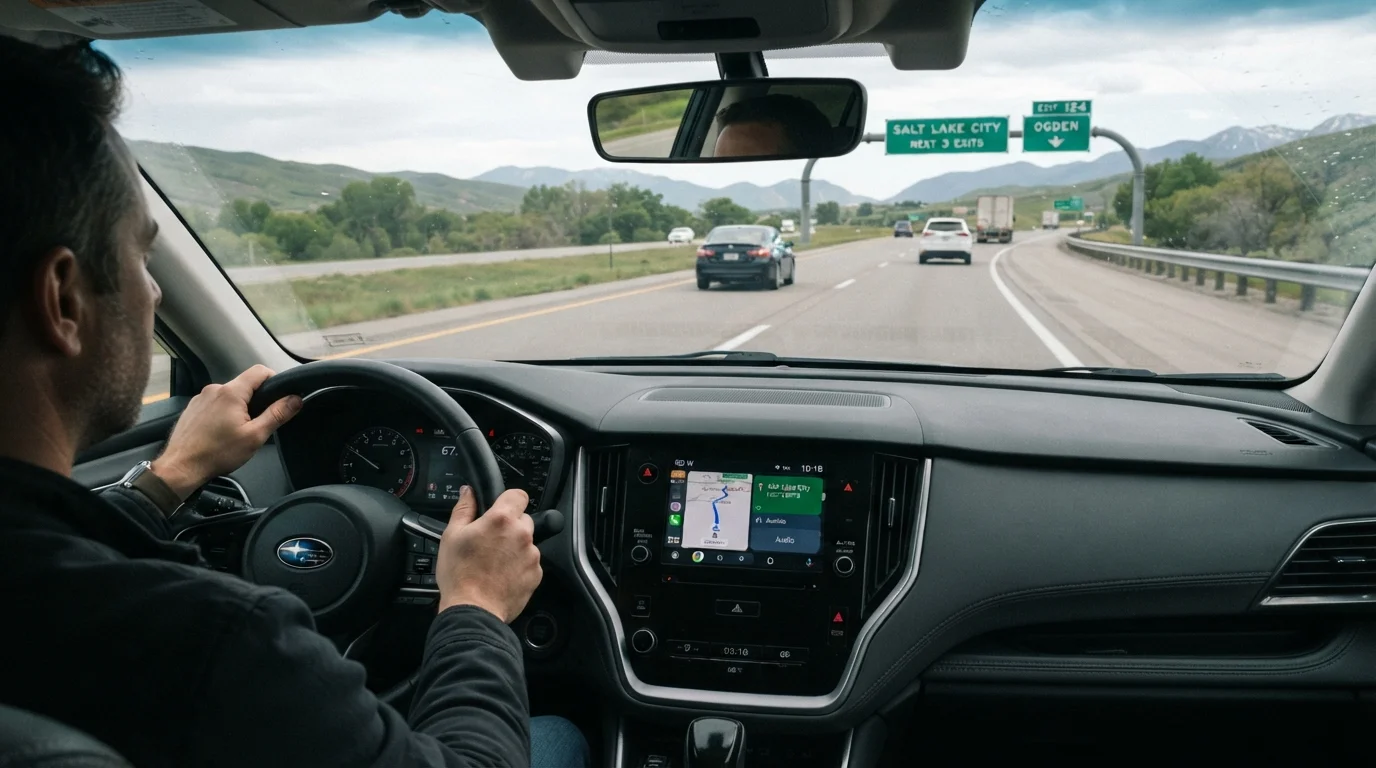
How Highway Driving Differs from City Streets
Highway driving involves higher sustained speeds, longer sight lines, and less frequent stopping than city driving - but it also removes the natural pace-setters of traffic lights and stop signs that new drivers typically rely on. The result is an environment where small errors happen faster and carry bigger consequences.
The core mental shift is moving from reactive driving (responding to signals and intersections) to anticipatory driving - scanning 10 to 15 seconds ahead rather than focusing on the vehicle directly in front of you. Speed differentials between lanes, sudden slowdowns due to incidents, and merging traffic all require decisions made earlier than urban driving typically demands.
For a broader look at how driving challenges vary across contexts, see our guide to safe urban driving, which covers how the city environment requires its own distinct set of skills.
On-ramp
The acceleration lane connecting a local road to a highway. It is designed to give drivers room to reach highway speed before merging into traffic.
Off-ramp
The deceleration lane that separates from the main highway and guides drivers onto a local road. Braking should happen here, not on the main roadway.
Blind spot
The area beside and slightly behind your vehicle that cannot be seen in your mirrors. A shoulder check - turning your head briefly - is required to verify this zone before changing lanes.
Three-second rule
A method for measuring following distance: count three seconds between when the car ahead passes a fixed point and when your car reaches the same point. This is the minimum gap recommended at highway speeds.
Speed differential
The difference in speed between two vehicles. Large speed differentials - such as a slow car in a fast lane - increase crash risk because nearby drivers have less time to react.
Deceleration lane
Another term for the off-ramp's initial stretch. It is a dedicated lane where you reduce speed before leaving the highway, keeping the main flow of traffic unaffected.
Merging Onto the Highway
The on-ramp is where new highway drivers most commonly freeze up. The goal of a merge is simple: match the speed of highway traffic, find a suitable gap, signal, and blend in smoothly. Here is what that looks like in practice:
- Accelerate throughout the on-ramp. The ramp exists to give you time and distance to reach highway speed - typically 55-70 mph. Do not arrive at the end of the ramp still doing 35 mph.
- Identify your gap early. Begin scanning the right lane before you reach the end of the ramp. Choose a gap that gives you at least three seconds of space once you slot in.
- Signal before you move. Activate your turn signal as you approach the merge point to communicate your intention to existing traffic.
- Do not stop at the end of the ramp unless traffic is at a complete standstill. Stopping forces a dangerous acceleration from zero in a lane where vehicles are moving at freeway speed.
Practice with a Trusted Co-Pilot First
If you have access to a licensed, experienced driver, ask them to ride along for your first few highway trips. Having someone who can calmly talk through what they see - traffic gaps, lane positioning, upcoming exits - can significantly reduce first-time anxiety. Choose a low-traffic time like a weekday mid-morning for your first attempt.
If traffic is heavy and no clean gap appears, adjust your speed on the ramp to time the gap - slow slightly to let a vehicle pass, then accelerate to match. This is safer than forcing a gap.
Lane Discipline and Speed Management
U.S. highways are generally organized so that the rightmost lane is for slower-moving traffic and vehicles entering or exiting. The left lane is intended for passing, not extended cruising. Many states formally require keeping right except to pass, and travelling slowly in the left lane can create hazardous speed differentials.
When changing lanes, use the mirror-signal-shoulder-check sequence every time: check mirrors, signal, glance over your shoulder to cover the blind spot, confirm the gap is clear, then move deliberately. Avoid lane changes near on-ramps where merging traffic is already managing its own speed adjustments.
On speed: posted limits are the legal ceiling, not a target. In adverse weather, following posted speeds may still be unsafe. For specific guidance on adjusting your approach when visibility drops, see driving in rain, fog, and snow.
Avoid Last-Minute Lane Changes
One of the most common new-driver mistakes is waiting too long to position for an exit or merge, then making an abrupt multi-lane move. Always plan at least half a mile ahead. Sudden lateral movements at highway speed give drivers in adjacent lanes almost no time to respond, and the consequences can be severe.
Maintaining Safe Following Distance
At 65 mph, a vehicle travels approximately 95 feet every second. A typical driver reaction time of 1.5 seconds means your car covers about 140 feet before you even begin to brake. This is why the three-second rule is the accepted minimum following distance on highways: watch the car ahead pass a fixed roadside marker and count - your front bumper should not reach that same marker in under three seconds.
Three seconds becomes inadequate in rain, fog, nighttime conditions, or heavy loads. Four to six seconds is more appropriate when traction or visibility is reduced. Tailgating - following too closely - is a leading cause of rear-end collisions and leaves you no margin when traffic ahead slows suddenly.
As your experience grows, be conscious of the habits that experienced drivers develop that can quietly erode safety. Our article on risky habits experienced drivers overlook is worth reading once you feel comfortable on the highway.
Exiting the Highway Safely
Exiting is straightforward if you plan ahead. The key steps:
- Know your exit in advance. Watch for exit signs, which typically appear at one mile and half-mile intervals. Decide to exit before you are alongside the off-ramp entrance.
- Signal and move to the right lane early. Do not make last-second lane changes across multiple lanes to reach an exit.
- Decelerate on the off-ramp, not on the highway. Brake only after you have moved onto the deceleration lane. Slowing on the main roadway creates a hazard for traffic behind you.
- Watch your speed on the ramp. Highway speeds feel normal after sustained freeway driving. Check the posted ramp speed and shed velocity gradually - ramps are often curved and shorter than they appear.
If you miss your exit, continue to the next one and reroute. Under no circumstances should you reverse or stop on a highway shoulder to re-enter an exit you have passed.
Before You Go: Preparation Checklist
Good highway trips begin before you turn the key. Run through these basics before each journey:
- Tires
- Check pressure and visually inspect for obvious damage. Underinflated tires handle poorly at speed and run hotter.
- Fuel
- Do not start a highway trip on a nearly empty tank. Highways in rural areas can have long gaps between service stations.
- Mirrors
- Adjust all three mirrors before moving. Your side mirrors should be set wide enough to minimize blind spots, not to show the side of your own car.
- Route familiarity
- Know your exit number and the general direction before you enter the highway. Programming navigation before driving is far safer than doing it at 65 mph.
- Phone
- Set it to Do Not Disturb or use a hands-free mount before pulling onto the road. Distraction is one of the most consistent contributors to highway crashes.
Age and experience shape how drivers perceive and respond to these risks - if you're curious about how crash risk evolves over a lifetime of driving, safe driving at every age provides useful context.
Your State's DMV Driver Handbook
Every state publishes an official driver handbook covering highway laws, speed limits, merging rules, and right-of-way. It is the authoritative reference for the specific rules in your state and is freely available on your state DMV website.
NHTSA Distracted Driving Resources
The National Highway Traffic Safety Administration publishes research-backed guidance on distracted driving, which is a significant factor in highway crashes. Their public resources explain the cognitive and physical risks of phone use at speed.