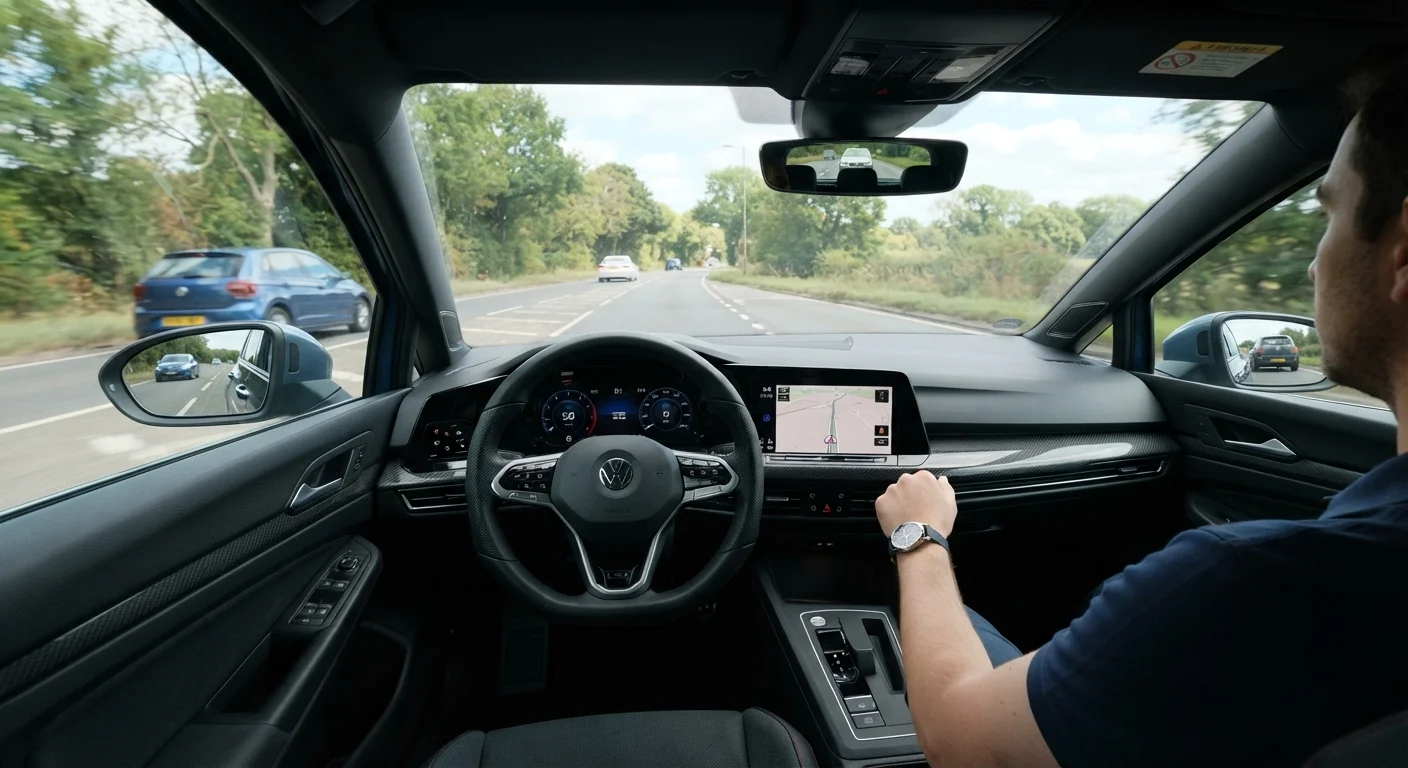
Why Most Mirror Setups Create Blind Spots
The default mirror habit for most drivers - positioning both side mirrors so that their own vehicle fills a large portion of each mirror's view - feels intuitive but is counterproductive. Seeing your own car confirms nothing useful about the traffic around you. It simply wastes mirror real estate that could show you the adjacent lane.
Driving safety researchers and traffic engineers have long noted that a properly outward-angled mirror setup dramatically reduces the size of the traditional blind spot - the roughly 20-foot zone beside and slightly behind the vehicle that neither the rearview nor a poorly positioned side mirror covers. When that gap is large, a lane change becomes a gamble. When it's minimized, you gain genuine awareness of what's beside you.
This isn't a fringe technique. Organizations including the Society of Automotive Engineers have published research supporting the outward-angled approach as more effective than the conventional center-your-car method. Yet driving schools and habit mean most motorists never reconsider the setup they learned - or guessed at - when they first got their license.
This matters especially at highway speeds, where the window for reacting to a vehicle in your blind spot is extremely narrow. As noted in our article on risky habits experienced drivers overlook, mirror complacency is one of the subtler but measurable contributors to collision risk.
Use a Reference Object to Fine-Tune Angle
Park near a flat wall or curb line and use it as a reference to confirm your side mirror angles are symmetrical and low enough to show the road surface alongside your vehicle. This takes 30 seconds and makes the difference between guesswork and a verified setup.
What to Do After Adjusting - and What Mirrors Can't Do
Once all three mirrors are set, spend a few minutes in normal driving conditions to build confidence with the new angles. The view will look different - particularly the side mirrors showing more road and less car - and that adjustment period is normal. Within a short drive, most drivers find the wider field of view noticeably more informative.
Even an optimal mirror configuration has limits. Fast-approaching vehicles can still enter a gap between mirror fields. Physical shoulder checks remain essential, particularly before any lane change. Blind-spot monitoring systems, available on many modern vehicles, are a useful supplement but should reinforce mirror discipline rather than replace it.
Mirrors Don't Eliminate Blind Spots Entirely
Even optimally adjusted mirrors leave some area around the vehicle that cannot be seen without a physical head check. Always perform a quick shoulder check before changing lanes or merging. Relying solely on mirrors - no matter how well positioned - is a known contributor to sideswipe collisions.
Visibility conditions affect how much your mirrors tell you. In poor weather, mirrors can fog, streak with rain, or become overwhelmed by glare from wet surfaces. Our guide on adjusting your driving habits for reduced visibility covers how to compensate when visual tools - including mirrors - are compromised.
Mirror setup also pairs directly with your overall pre-drive routine. Checking all three mirrors is one component of the quick vehicle review described in our pre-trip vehicle safety checklist, which takes only a few minutes and meaningfully reduces the chance of preventable road hazards.
Proper mirror use also supports maintaining safe following distance - a discipline explored in our piece on tailgating and following distance. Mirrors that show you accurate traffic behind you help you make informed decisions about spacing, not just lane changes.