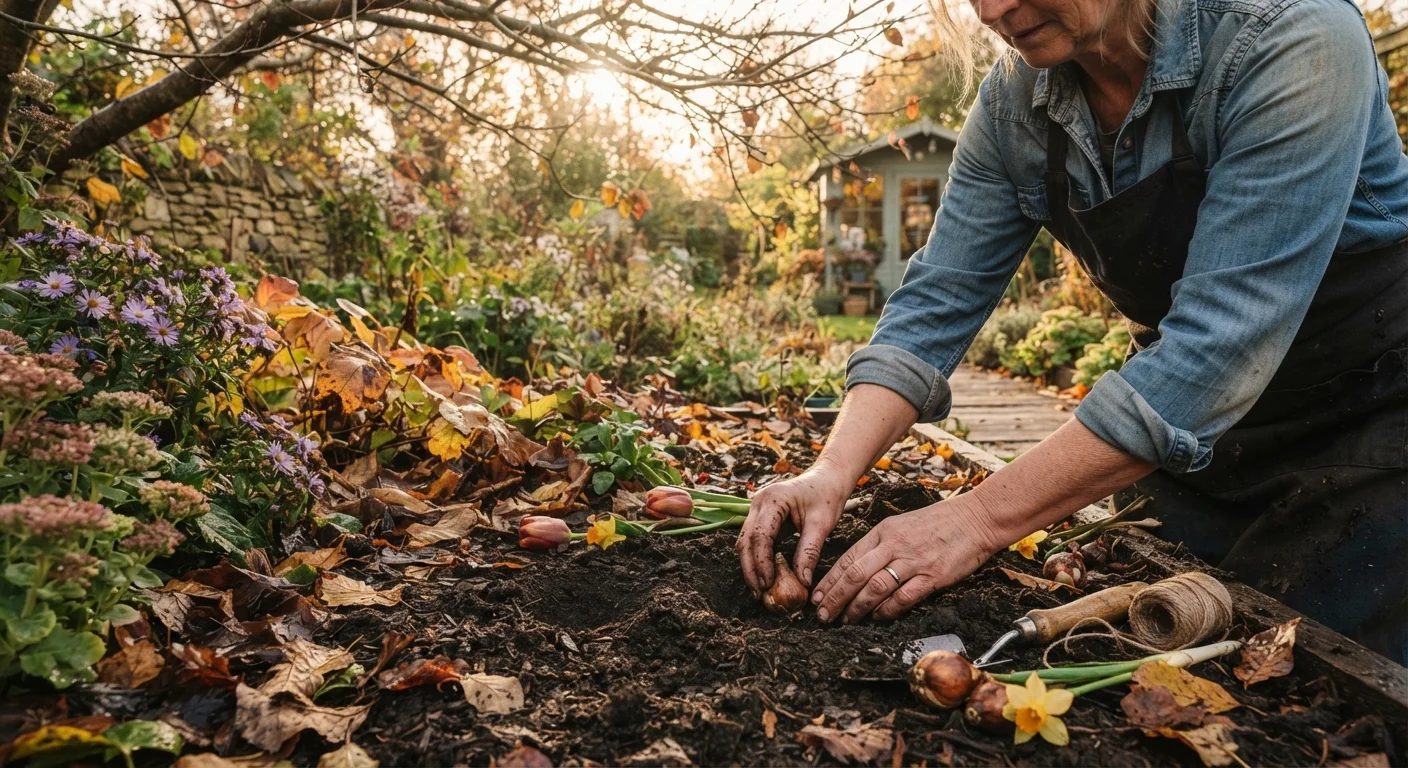
Why Fall Garden Prep Matters More Than Spring Cleanup
Most gardeners think of spring as the season for fresh starts, but fall is actually when the real groundwork happens. Soil organisms are still active, roots keep growing even after tops die back, and plants you put in the ground now — bulbs especially — have weeks to establish before hard freezes arrive.
The key to timing everything correctly is knowing your average first frost date. Check with your local cooperative extension service for the most reliable date for your zip code. Your USDA hardiness zone and local microclimate will also influence how aggressively you need to protect plants and how early you should act.
Use this checklist starting four to six weeks before your expected first frost. Work through it in order — soil tasks first, planting second, cleanup third, and storage last.
Soil test kit
Measures pH and key nutrients so you know exactly which amendments your beds actually need.
Garden fork or spade
Turns compost and amendments into existing beds without disrupting soil structure excessively.
Bulb planter
Creates uniform holes at the correct depth for spring-blooming bulbs quickly and with less effort than a trowel.
Pruning shears
Cuts back perennial stems cleanly to reduce disease entry points and tidy beds before winter.
Wheelbarrow or garden cart
Moves compost, mulch, and pulled plant material efficiently across the yard.
Metal file
Sharpens spade and hoe edges before storage so they're ready for use in spring.
The Complete Fall Garden Checklist
Work through these grouped tasks systematically. Not every task will apply to every garden — skip items that don't fit your situation and focus energy where it counts most for your space. If you're new to food growing, our vegetable garden primer can help you understand what you're putting to bed for the season.
Soil & Beds
Bulb Planting
Perennial Care
Vegetable Bed Closeout
Tool & Equipment Storage
Don't Compost Diseased Plant Material
Home compost piles rarely reach the sustained high temperatures needed to kill fungal spores, bacteria, and pest eggs. If any plant showed signs of disease — powdery mildew, blight, or unusual spotting — bag that material and put it in the trash rather than the compost bin. Spreading diseased compost is one of the fastest ways to reintroduce problems to next year's beds.
Setting Yourself Up for a Strong Spring
Once you've worked through the checklist, take fifteen minutes to write brief notes: which perennials struggled, where bare spots appeared, and what you'd like to try differently. A quick sketch or phone photo of empty beds helps enormously when you're ordering seeds in January.
If you want a head start on next year's vegetables, starting seeds indoors in late winter is a natural next step — and the soil you've amended this fall will be ready to receive transplants the moment conditions allow.
For a broader view of what else needs attention around your property as seasons change, the seasonal home maintenance guide covers gutters, weatherstripping, and other exterior tasks that pair well with a fall garden walkthrough.
Annuals vs. Perennials: Know What You're Cutting Back
Before you prune anything, confirm whether it's an annual or a perennial. Annuals complete their life cycle in one season and can be pulled entirely. Perennials return from the root each spring and should only be cut back — never dug up unless you intend to divide or relocate them. If you're unsure what's in your beds, review our guide to annuals and perennials before you start cutting.