Why Warning Signs Deserve Your Attention
Your home communicates constantly — through sounds you hear at night, stains you stop noticing, and doors that stopped closing right sometime last winter. These aren't quirks. They're early signals that something in your home's systems is under stress.
The good news: most serious structural and mechanical failures give you fair warning before they become expensive emergencies. A small ceiling stain might mean a single loose pipe fitting. Left unaddressed for two seasons, that same stain can point to rotted framing, mold, and a five-figure remediation bill. The difference is catching it early and acting deliberately.
This guide walks you through eight of the most common warning signs — what they typically mean, what you can safely investigate yourself, and when the smart move is picking up the phone. For a structured schedule to pair with this knowledge, see our seasonal home maintenance guide.
Brown or yellow ceiling stains
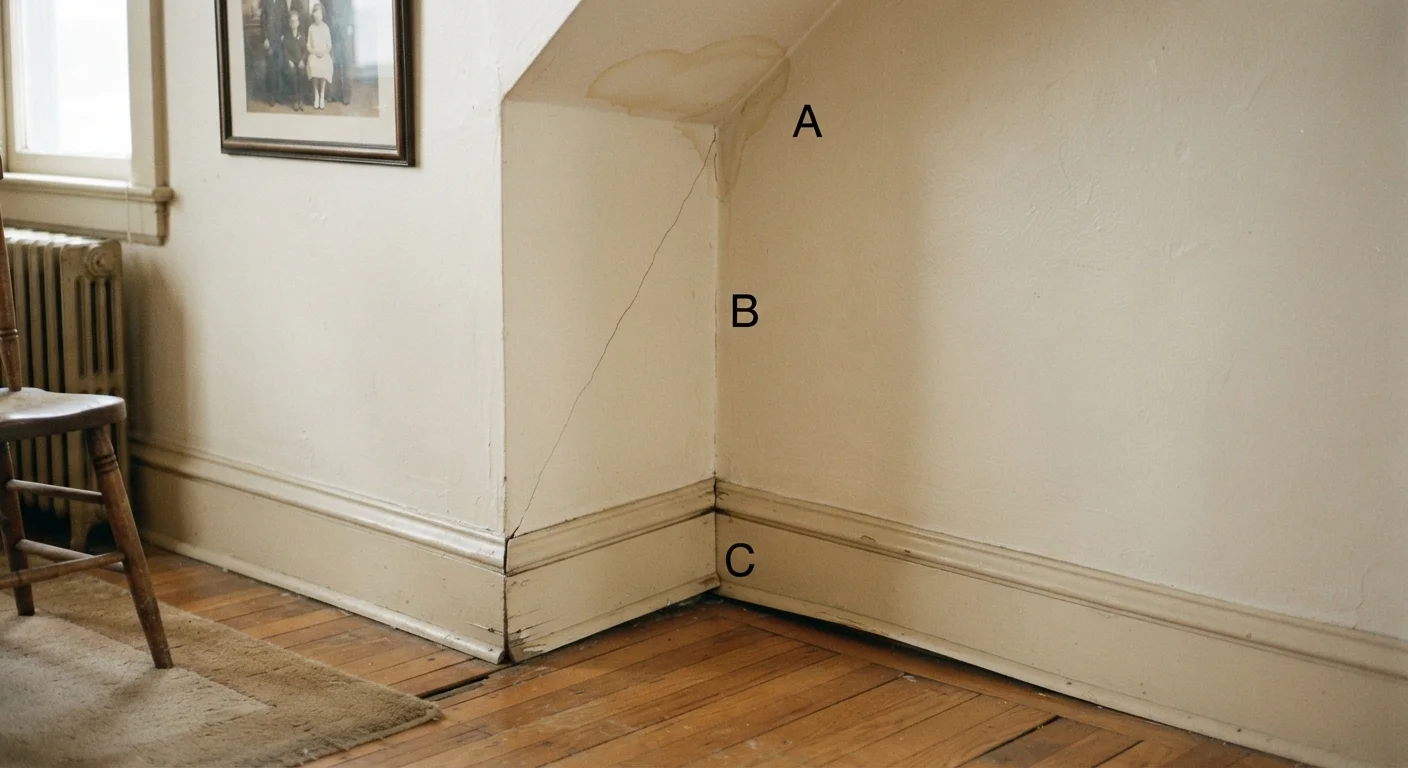
A discolored patch on your ceiling almost always means water has pooled above it at some point. The stain itself is dried mineral residue left behind after the moisture evaporated. The source could be a slow roof leak, a sweating pipe, or an overflowing appliance on the floor above.
Press gently on the stained area — if the drywall feels soft or spongy, moisture is still present. Check the attic or the space directly above for dripping, daylight coming through the roof deck, or dark staining on insulation. A one-time stain from a since-repaired leak may be cosmetically patched; a recurring stain needs the source fixed first. Our roof maintenance guide can help you inspect from the outside safely.
A soft or spongy ceiling stain means moisture is still active — find the source before patching.
Musty or sulfur-like odors
A persistent musty smell — especially in basements, crawl spaces, or bathrooms — typically signals mold or mildew growth in a hidden damp area. This isn't just an aesthetic issue: prolonged mold exposure can affect respiratory health, and remediation becomes significantly more involved once mold colonizes wall cavities or insulation.
A rotten-egg or sulfur smell is more urgent. In a home with natural gas, that odor is added deliberately by utilities so leaks are detectable. If you smell sulfur, don't operate light switches, open windows if you can do so quickly, leave the building, and call your gas utility from outside. Don't re-enter until a professional has assessed the situation.
A sulfur smell in a gas-heated home is an emergency — leave first, call your utility second.
Doors and windows that stick or won't latch
Wood naturally expands in humidity, so a sticky door in August isn't always alarming. But if multiple doors or windows throughout the house start binding or misaligning — especially if this develops gradually over months — it can signal foundation movement or framing shifts that warrant professional evaluation.
Check whether the sticking follows a seasonal pattern or has progressively worsened year-round. Also inspect door frames and window surrounds for diagonal cracks radiating from corners; these are a more direct indicator of structural stress. A licensed structural engineer (not just a general contractor) is the right call when you suspect foundation involvement. Properly sealed frames also affect your home's energy efficiency — see our weatherstripping walkthrough for related guidance.
Diagonal cracks at window or door corners often signal structural stress, not just settling.
Running, hissing, or banging sounds from plumbing
A toilet that runs continuously after flushing usually has a faulty flapper valve — a straightforward, low-cost fix available to most DIYers. A hissing sound from supply lines or valves can indicate water pressure that's too high, which stresses fixtures and appliances over time and increases leak risk.
Banging pipes — sometimes called water hammer — occur when water flow is suddenly stopped and the pressure wave has nowhere to go. This stresses pipe joints and fittings. A licensed plumber can install a water hammer arrestor to address it. Any sound coming from your water heater (popping, rumbling) may indicate sediment buildup; our water heater basics article explains what's happening and what to do.
High water pressure is often silent but steadily damages fixtures — a pressure gauge can confirm it.
Hairline cracks in walls or ceilings
Not all cracks are equal. Hairline cracks in drywall along seams or at ceiling corners are common in newer homes as framing lumber dries and stabilizes. These are typically cosmetic and can be filled and repainted. Horizontal cracks in a basement's concrete block or poured concrete wall are more serious — they can indicate lateral soil pressure and should be evaluated by a structural professional.
Stair-step cracks in brick or mortar joints, or cracks that are wider at one end than the other, suggest differential settlement — meaning one part of the foundation is sinking faster than another. Map any cracks you find with tape and a date marker. If they grow measurably over weeks, stop waiting and get a professional assessment.
Horizontal basement wall cracks and widening stair-step cracks in brick are red flags for structural review.
Peeling paint or bubbling wallpaper
Paint or wallpaper that bubbles, blisters, or peels away from walls is almost always a moisture problem rather than a surface-preparation failure — unless the home was freshly painted over a problematic substrate. Look for the moisture source: exterior wall gaps, a bathroom without adequate ventilation, or condensation from thermal bridging in poorly insulated walls.
In bathrooms, persistent peeling around tub surrounds or shower enclosures may mean the waterproof membrane behind the tile has failed. This can allow water to migrate into framing and subflooring silently for years. Don't just repaint over it without investigating and correcting the underlying moisture pathway first.
Peeling paint is rarely about the paint — it's almost always a sign of moisture intruding behind the surface.
Sagging or soft spots in floors
When you walk across a floor and feel a bounce, dip, or soft patch — particularly in bathrooms, kitchens, or near exterior walls — it may indicate subfloor damage from water exposure, rot in floor joists, or pest activity. Tile that cracks or grout that repeatedly fails in a pattern can also point to a compromised subfloor beneath.
Lift floor vents or access panels in nearby areas to visually inspect joists if you can do so safely. Dark discoloration, soft wood you can press a fingernail into, or visible insect galleries are all signs of significant damage requiring professional assessment. Subfloor and joist repairs typically need permits in most jurisdictions — confirm local requirements before any work begins.
A springy or soft floor in a bathroom or kitchen is often the last visible sign of prolonged hidden moisture damage.
Gutters overflowing despite recent cleaning
If gutters overflow during moderate rain even after you've cleared debris, the slope (called the pitch) may be incorrect, or the downspout volume is insufficient for your roof's surface area. Chronic overflow sends water sheeting down siding, pooling against the foundation, and eventually finding its way into the basement or crawl space.
Walk around the foundation after a heavy rain and look for water pooling within three feet of the house. Grade should slope away from the foundation at roughly one inch per foot for the first six feet. Our gutter inspection guide covers how to identify slope problems and when to bring in a pro for re-hanging or downspout additions.
Gutters that overflow after cleaning point to a pitch or capacity problem that directs water toward your foundation.
Acting on What You Find
Noticing a warning sign is only half the work — knowing how to respond is what keeps small problems from compounding. Some signs call for a quick DIY fix this weekend. Others need a licensed plumber, electrician, or structural engineer, regardless of your comfort with tools.
Start a Simple Home Issue Log
Keep a running note — a phone memo works fine — where you record warning signs with the date you first noticed them and a photo. This log helps you spot patterns (seasonal vs. progressive), gives contractors useful context, and serves as documentation if you're renting. Revisit it when you do your seasonal walkthrough each spring and fall.
A practical rule: if a problem involves your electrical panel, gas lines, structural load-bearing elements, or anything that requires a permit in your municipality, stop and call a licensed professional. Unpermitted or incorrect repairs can create safety hazards and complicate a future home sale. Our article on when permits are required explains the landscape clearly.
Renters should document every warning sign with dated photos and submit written notice to their landlord rather than attempting repairs themselves — this protects you legally and ensures proper accountability. For anyone buying a home, learning to read a home inspection report will help you contextualize what these signs mean in the bigger picture of a property's condition.
When in Doubt, Get a Second Opinion
If a contractor tells you that a warning sign requires immediate, extensive, and expensive work, it's reasonable to request a written assessment and get an independent evaluation from a second licensed professional before committing. Reputable contractors will not pressure you to decide on the spot. For significant structural or systems concerns, a certified home inspector can provide an objective written report for a relatively modest fee.