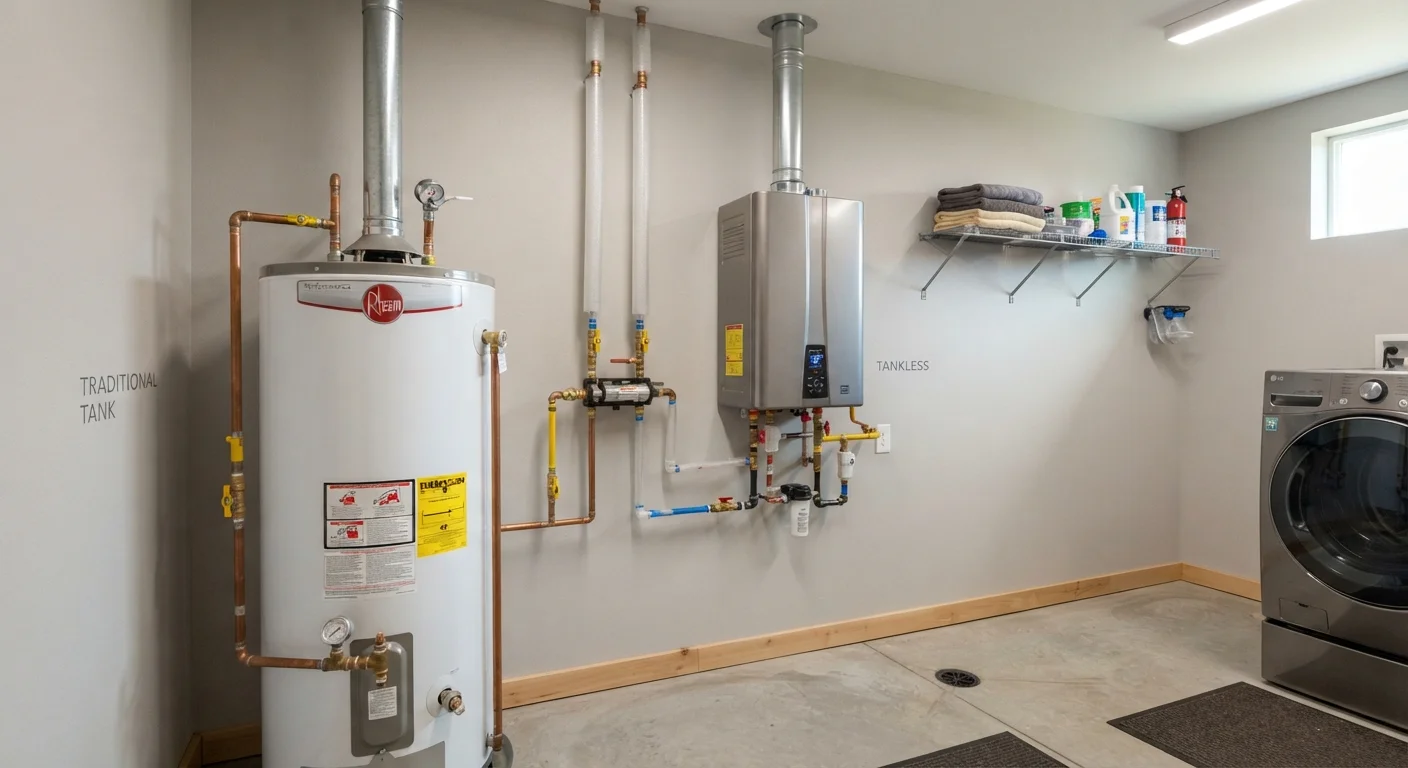
How Water Heaters Work: Tank vs. Tankless
At their core, all water heaters do the same job: transfer heat energy into your home's water supply. Where they differ is when and how they do it.
Tank water heaters maintain a continuously heated reservoir — typically 30 to 80 gallons — so hot water is always on standby. A thermostat triggers the burner or electric element whenever the stored water drops below a set temperature. This "standby" energy use is an inherent efficiency cost.
Tankless water heaters activate only when a tap is opened, passing water over a high-powered heat exchanger. They eliminate standby losses but deliver a limited flow rate — typically 2–5 gallons per minute depending on the unit — which can be a constraint in larger households running multiple fixtures at once.
Fuel type matters too. Gas models (natural gas or propane) heat water faster than most electric models and tend to cost less to operate where gas rates are low. Electric resistance models are simpler to install and maintain. Heat pump water heaters — a newer electric option — move heat from surrounding air rather than generating it directly, making them significantly more efficient but requiring adequate indoor space and moderate ambient temperatures.
Heat Pump Water Heaters: A Space Consideration
Heat pump water heaters are highly efficient but require a minimum of 700–1,000 cubic feet of unconditioned or semi-conditioned space to draw heat from the surrounding air effectively. They also produce cool, dehumidified air as a byproduct — useful in warm climates, potentially problematic in cold ones. If you're considering this upgrade, consult with a qualified installer who can evaluate your home's suitability.
DIY Maintenance Tasks That Actually Make a Difference
Routine maintenance can noticeably extend the life of your water heater and improve efficiency. These are tasks most homeowners can handle with basic tools.
Flush the tank annually
Sediment — primarily calcium and magnesium minerals from hard water — settles at the bottom of tank heaters over time, insulating water from the heating element and causing the unit to work harder. Flushing the tank once a year clears this buildup. Turn off the heater, connect a garden hose to the drain valve, and let the water run until it clears. Always let the water cool first to avoid burns.
Inspect the anode rod every 2–3 years
The anode rod is a magnesium or aluminum rod that corrodes in place of your tank's steel lining. When it's depleted, the tank itself begins to rust from the inside. Replacing a worn anode rod — typically a straightforward hex-socket job — is one of the highest-value maintenance tasks you can do. Check your owner's manual for rod location and specifications.
Check the temperature setting
Confirm your thermostat is set to around 120°F. Higher settings waste energy and increase scalding risk; lower settings may not adequately control bacterial growth in the tank.
For a broader view of appliance and system upkeep throughout the year, see our seasonal home maintenance guide.
Test Your Pressure Relief Valve Annually
The temperature and pressure relief (TPR) valve is a critical safety device that releases pressure if the tank overheats. Lift the test lever briefly once a year to confirm it moves freely and releases water. If it sticks, drips constantly, or fails to release, have a licensed plumber replace it promptly — do not attempt this replacement without the right training and parts.
Warning Signs You Shouldn't Ignore
Your water heater often signals trouble before it fails completely. Catching these signs early can mean the difference between a minor repair and an emergency replacement.
- Rumbling or popping sounds: Heavy sediment buildup causes these noises as water percolates through mineral deposits. It's a clear sign flushing is overdue — or that the unit is significantly degraded.
- Rusty or metallic-tasting water: Corrosion inside the tank or a failing anode rod. Have a plumber assess whether the tank can be salvaged.
- Pooling water around the base: Any leak from the tank body itself is serious and generally means replacement. Leaks from fittings or the pressure relief valve may be repairable.
- Inconsistent hot water: If you're running out of hot water faster than usual, a failing heating element (electric), a faulty thermostat, or sediment buildup may be responsible.
Learning to read these early signals is part of broader homeowner literacy — our article on reading your home's warning signs covers many more.
When to Call a Licensed Plumber
While flushing tanks and checking anode rods are genuinely homeowner-friendly tasks, other water heater work falls outside safe DIY territory.
Always hire a licensed professional for:
- Gas line connections, replacements, or leak repairs
- Venting and exhaust system modifications
- Pressure relief valve replacement (these are safety-critical components)
- Electrical wiring or panel connections for electric heaters
- Full unit replacement, especially converting between fuel types or switching to tankless
Many municipalities also require permits for water heater installations. A licensed plumber will know your local code requirements and pull the necessary permits — skipping this step can create problems at resale or during insurance claims. This is similar to the considerations covered in our guide on DIY electrical work at home, where the line between homeowner-appropriate and professionally regulated tasks has real consequences.
If you're new to managing home systems overall, our home maintenance guide for first-time owners is a useful starting point for building that foundation of knowledge.
14–18%
Share of home energy use from water heating
According to the U.S. Department of Energy, water heating typically accounts for 14–18% of a home's total energy costs, making it one of the largest ongoing utility expenses.
8–12 years
Average lifespan of a tank water heater
Industry guidance from plumbing trade organizations suggests most conventional storage tank water heaters reach the end of reliable service life between 8 and 12 years.
120°F
Recommended thermostat setting
The U.S. Department of Energy recommends 120°F as the optimal temperature to balance safety, energy efficiency, and sanitation for most households.