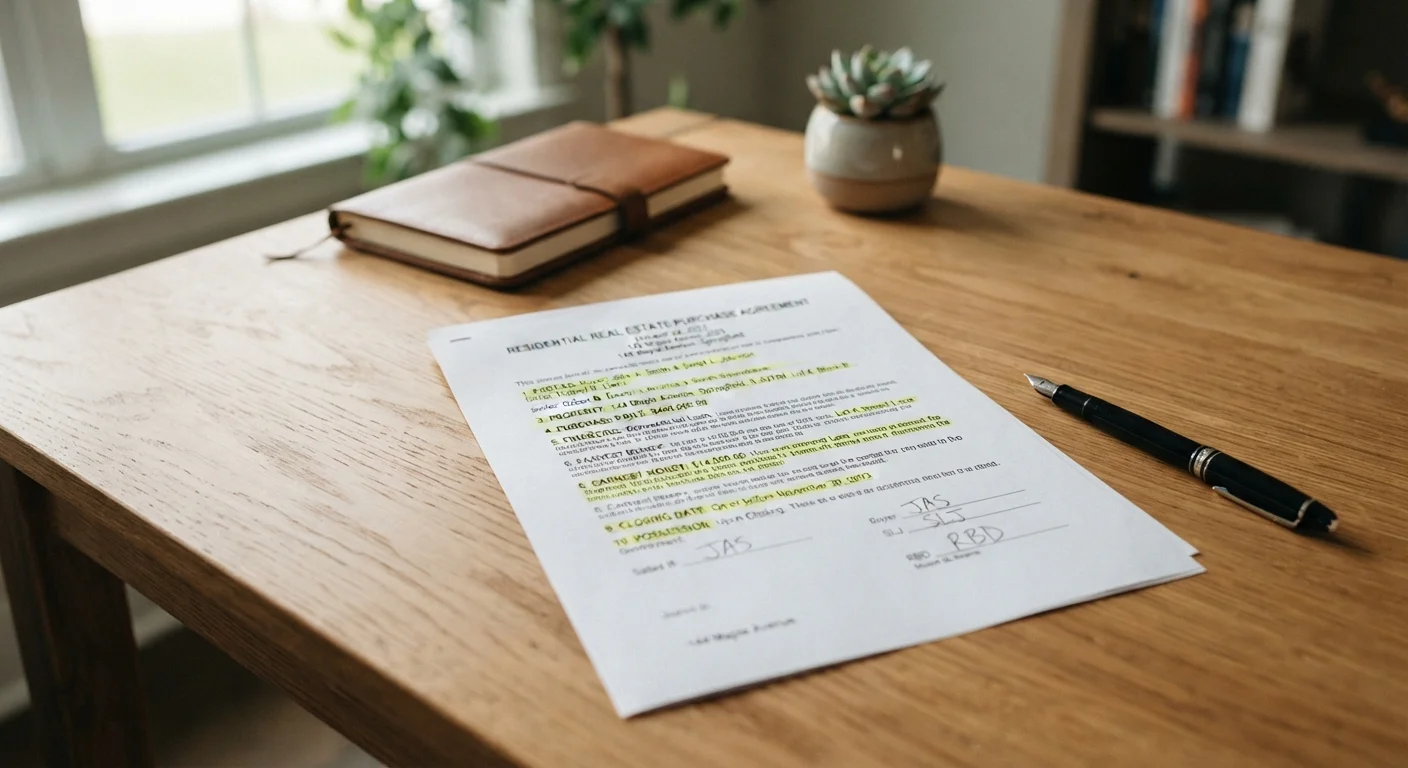
What Contingencies Actually Do
When you make an offer on a home, you're not just naming a price — you're also setting conditions. Contingencies are the clauses in a purchase agreement that give buyers a structured, legal way to exit a transaction if something goes wrong, without losing their deposit.
Think of them as checkpoints. Between signing the contract and reaching the closing table, several things need to go right: your loan has to be approved, the property has to pass inspection, and the home has to appraise at or near the purchase price. Contingencies ensure that if any of those checkpoints fail, you're not simply trapped — or out thousands of dollars.
Understanding how each one works, and what you give up when you waive one, is essential before submitting any offer. For a broader pre-offer checklist, see what to prepare before making an offer.
~80%
Of purchase offers that include contingencies
According to National Association of Realtors survey data, the majority of contracts include at least one contingency, most commonly financing and inspection.
1–3%
Typical earnest money as share of purchase price
This is the deposit most at risk if a buyer exits a contract outside of a valid contingency — amounts vary by market and contract terms.
The Three Core Contingencies
Financing Contingency
Also called a mortgage contingency, this clause gives buyers a set number of days — often 21 to 30 — to secure a loan commitment from a lender. If financing falls through and you've properly exercised the contingency within the deadline, you can exit the contract and recover your earnest money. Without it, a denied loan could still leave you on the hook for that deposit.
Inspection Contingency
This contingency gives buyers the right to hire a licensed home inspector and, depending on findings, negotiate repairs, request a price reduction, or walk away from the deal. It is one of the most valuable buyer protections because it creates visibility into the physical condition of the property before closing. See also how to negotiate after the inspection and why inspections and permits matter.
Appraisal Contingency
When you use a mortgage, your lender orders an appraisal to confirm the home's market value. If the home appraises below the purchase price, the lender will not finance the full amount. An appraisal contingency lets you renegotiate — or exit — rather than being forced to cover the gap out of pocket. Learn what causes low appraisals and what your options are.
Know Your Contingency Deadlines
Every contingency comes with a deadline written into the contract. Missing an inspection deadline, for example, can be treated as a waiver — even if you never intended to give it up. Work with your agent to calendar every deadline the moment a contract is signed, and build in time to get inspector appointments or lender documents in order.
When Sellers Push Back — and Why
In a competitive market, sellers often prefer offers with few or no contingencies because each one represents a potential exit for the buyer. A seller who accepts a contingent offer essentially keeps the home off the market while the buyer's conditions are resolved — a period that can stretch several weeks.
Whether you're in a buyer's or seller's market determines how much leverage you have at the negotiating table. In a hot seller's market, buyers sometimes waive contingencies to stay competitive. But waiving protections is not without serious consequence.
When contingencies are waived and something goes wrong — a denied loan, a failed inspection, a low appraisal — the buyer may lose their earnest money and still be unable to close. Understand exactly how earnest money works and when it's at risk.
Your agent plays a critical role in advising whether waiving a contingency is reasonable given the specific property and market. Learn what a buyer's agent does and how their fiduciary duty works before signing anything.
Contingency Rules Vary by State
Real estate contract law and standard forms differ significantly from state to state. Some states have attorney review periods that provide additional buyer protections; others rely entirely on the contractual contingency language. Always review your specific purchase agreement with a qualified real estate attorney or licensed agent familiar with local law.
This article is for general informational purposes only and does not constitute legal, financial, or real estate advice. Consult a licensed real estate professional or attorney for guidance specific to your situation and state.