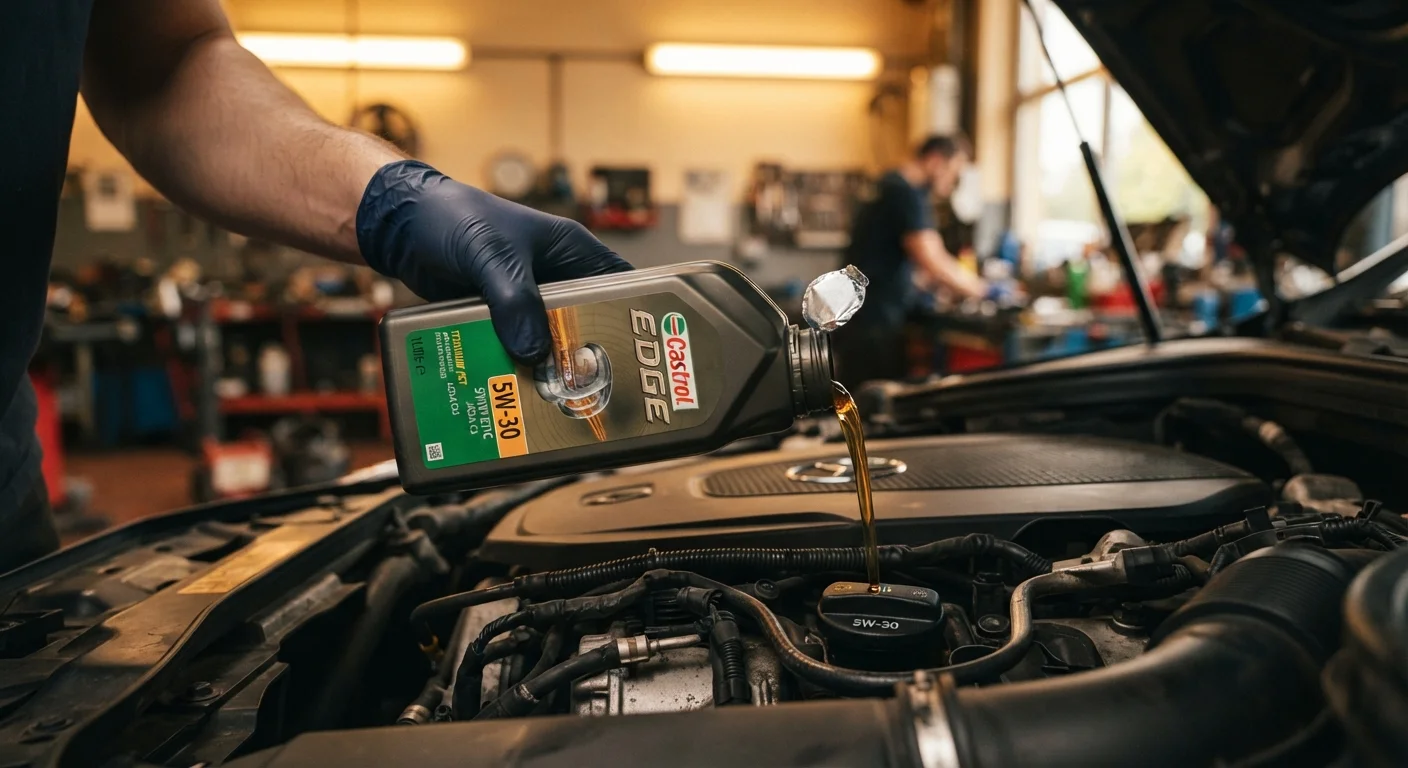
What Separates Conventional from Synthetic Oil
Motor oil does two fundamental jobs: it lubricates moving metal parts to reduce friction, and it carries heat and contaminants away from the engine. The difference between conventional and synthetic oil comes down to how each is produced and how well it holds up under stress.
Conventional motor oil is refined directly from crude petroleum. It contains natural hydrocarbons of varying sizes and shapes, which means its performance can degrade faster as temperatures rise or as the oil ages. It is adequate for many standard engines but tends to break down more quickly under demanding conditions.
Synthetic motor oil is engineered at a molecular level - its base stocks are either chemically modified petroleum or entirely lab-synthesized compounds. This uniformity makes synthetic oil more resistant to thermal breakdown, less prone to thickening in cold starts, and better at maintaining viscosity under sustained high heat. Turbocharged engines and those with tight tolerances particularly benefit from these properties.
A third option, synthetic blend, mixes conventional base stock with synthetic additives. It performs better than straight conventional oil, especially at temperature extremes, and typically costs less than full synthetic - making it a practical middle ground for many drivers. See our guide to engine fluids for a broader look at what else is keeping your engine running.
| Criterion | Conventional Oil | Synthetic Oil |
|---|---|---|
| Base source | Refined crude petroleum | Chemically engineered base stocks |
| Typical change interval | 3,000-5,000 miles | 7,500-15,000 miles |
| Cold-weather performance | Thickens more at low temps | Flows more readily at cold start |
| High-heat stability | Degrades faster under sustained heat | Maintains viscosity better under heat |
| Cost per quart | Generally lower | Generally higher |
| Cost over time | More frequent changes increase cost | Longer intervals can offset higher price |
| Engine compatibility | Suitable for many older engines | Required by many modern/turbo engines |
How Often Should You Actually Change Your Oil?
The old "every 3,000 miles" rule was a reasonable guideline when conventional oil and older engine tolerances were the standard. For many of today's vehicles - especially those running full synthetic - that interval is unnecessarily short.
General guidance now looks more like this:
- Conventional oil: every 3,000-5,000 miles, or as specified in your owner's manual
- Synthetic blend: typically every 5,000-7,500 miles
- Full synthetic: often 7,500-15,000 miles, depending on vehicle and manufacturer specs
These are ranges, not prescriptions. Your owner's manual provides the specific intervals and oil grade your engine was designed for - and that guidance takes precedence over general rules. Many newer vehicles include an oil life monitoring system that tracks driving conditions and alerts you when a change is genuinely needed, rather than on a fixed-mile schedule.
~75%
New U.S. vehicles recommending synthetic
Industry analysts estimate the majority of new passenger vehicles sold in the U.S. now carry factory recommendations for full synthetic or synthetic blend oil.
Up to 15,000 mi
Maximum interval for some full synthetics
Some manufacturers specify oil change intervals as long as 15,000 miles for full synthetic oil under normal driving conditions.
5,000 mi or less
Recommended interval under severe conditions
Frequent short trips, extreme temperatures, and heavy towing are commonly cited as conditions that warrant shorter intervals regardless of oil type.
Driving habits matter too. Mechanics often refer to "severe duty" conditions - which include frequent short trips under 5 miles, stop-and-go city driving, towing or hauling heavy loads, and operation in very hot or very cold climates. These conditions accelerate oil degradation and may justify shorter change intervals regardless of oil type. If you're unsure whether your driving qualifies, knowing how to evaluate service recommendations can help you ask the right questions at your next visit.
Viscosity Grades, High-Mileage Oils, and What Labels Mean
Every bottle of motor oil carries a viscosity rating like 5W-30 or 10W-40. This rating describes how the oil flows at low temperatures (the number before the W, which stands for winter) and at operating temperature (the number after the W). A lower cold-flow number means the oil reaches engine components faster during cold starts - a critical window when most engine wear occurs.
Your owner's manual specifies the correct viscosity grade for your engine. Using a different grade - especially a heavier one than specified - can reduce fuel efficiency and, in some cases, leave critical components briefly unprotected at startup.
High-mileage motor oils are a separate category worth understanding. Formulated for engines with 75,000 miles or more, they typically contain seal conditioners to reduce minor leaks and higher levels of antioxidants to address the wear and oxidation common in aging engines. They're available in both conventional and synthetic formulations.
If your vehicle has significant mileage and you're considering switching from conventional to full synthetic, consult a qualified mechanic first. In some older engines with worn seals, the detergent properties of synthetic oil can surface pre-existing issues - something worth knowing before making the swap. For guidance on what maintenance tasks you can handle yourself versus when to bring in a professional, our DIY vs. shop comparison is a useful reference.
Don't Rely on Oil Color Alone
Oil darkens naturally as it circulates through an engine - dark oil is not necessarily degraded oil. Modern oils are formulated with detergents that cause color change as they suspend combustion byproducts. Rather than judging oil condition by appearance, follow your manufacturer's recommended interval or use your vehicle's oil life monitoring system if equipped.
Falling behind on oil changes has real consequences for engine longevity. Our article on the hidden costs of skipping maintenance explains what actually happens inside an engine when service intervals are ignored.