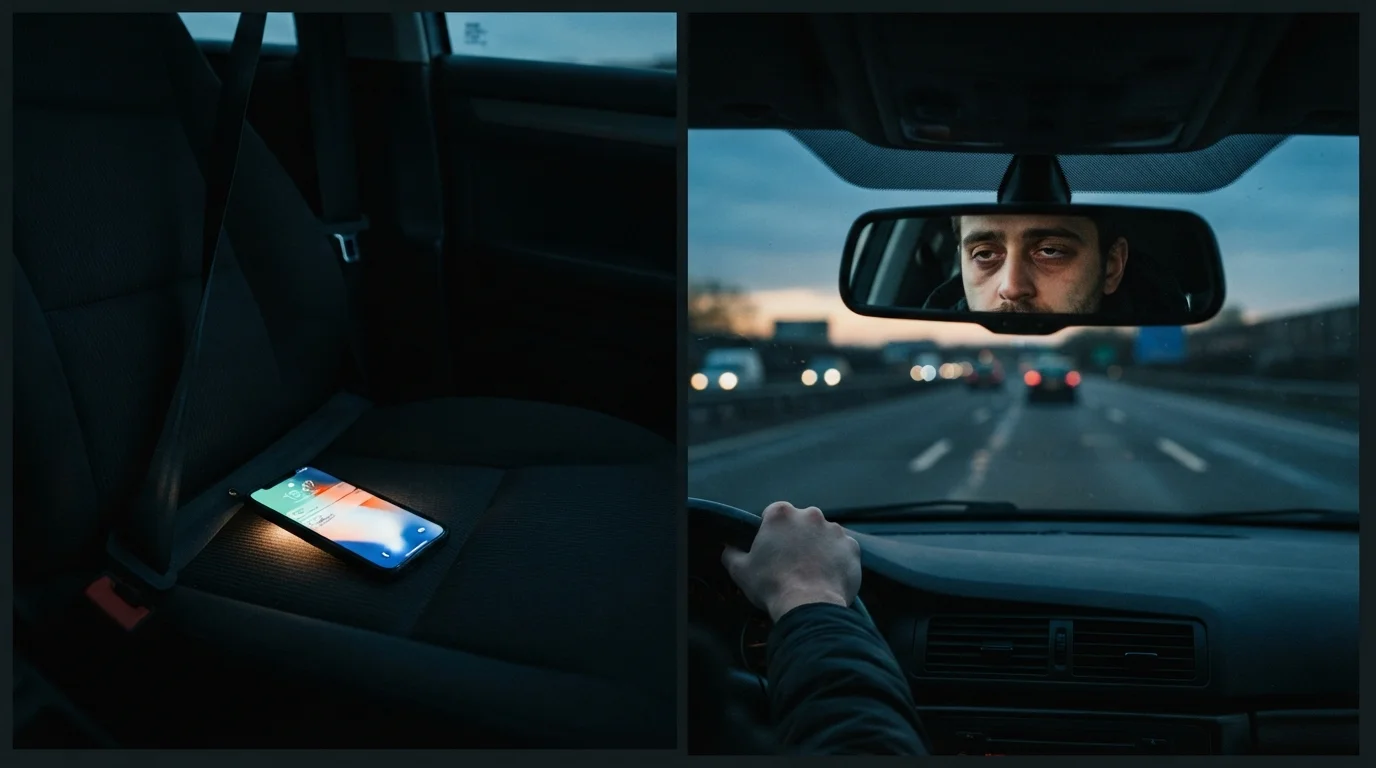
How Each Impairment Works on the Brain
Distracted driving and drowsy driving both reduce a driver's ability to respond to hazards, but they operate through distinct mechanisms. Understanding the difference matters because each demands a different prevention strategy.
Distracted driving pulls attention away from the driving task through three channels: visual (eyes off the road), manual (hands off the wheel), and cognitive (mind off the task). Sending or reading a text message engages all three simultaneously. According to the National Highway Traffic Safety Administration (NHTSA), reading a text at 55 mph is the cognitive equivalent of driving the length of a football field with your eyes closed.
Drowsy driving works differently. Sleep deprivation degrades neural processing speed, decision-making, and situational awareness gradually and continuously. The most dangerous element is the microsleep - an involuntary lapse in consciousness lasting 4 to 5 seconds that a driver typically cannot detect or prevent. At highway speed, a 5-second microsleep covers roughly 100 yards without any driver input.
Both impairments are compounded in challenging road conditions. See our guide to driving in rain, fog, and snow for how reduced visibility raises the stakes when your attention or alertness is already compromised.
Comparing the Two: A Side-by-Side Look
While both impairments elevate crash risk, they differ in onset, duration, legal treatment, and the populations most affected.
| Criterion | Distracted Driving | Drowsy Driving |
|---|---|---|
| Onset | Immediate, event-triggered | Gradual, cumulative |
| Self-awareness of impairment | Usually recognized (driver knows they're distracted) | Often undetected - microsleeps occur unconsciously |
| Primary impairment mechanism | Divided attention across visual, manual, cognitive channels | Degraded processing speed, judgment, and alertness |
| Legal status in most U.S. states | Handheld phone use widely prohibited | Laws vary; rarely enforceable in real time |
| Peak risk window | Any time a device or in-cab distraction is present | Midnight-6 a.m. and mid-afternoon |
| Highest-risk demographic | Drivers aged 16-24 | Shift workers, commercial drivers, sleep-disordered individuals |
| Effective countermeasure | Remove distraction source before driving | Adequate sleep; pull over if drowsy |
One distinction worth highlighting: distracted driving is episodic - it typically occurs in identifiable moments tied to a specific activity. Drowsy driving is cumulative; impairment builds over hours or days of insufficient sleep and doesn't reset simply because a driver feels more alert after coffee or a short rest stop.
~8 sec
Average eyes-off-road time per text
NHTSA estimates the average text takes a driver's eyes off the road for approximately 4.6 seconds; at highway speeds this covers significant distance.
1 in 25
Adults who report falling asleep while driving in the past 30 days
The Centers for Disease Control and Prevention (CDC) reported this rate among surveyed U.S. adult drivers.
~100 yds
Distance covered during a 5-second microsleep at highway speed
At 60 mph, a vehicle travels approximately 88 feet per second - making a brief microsleep equivalent to driving nearly the length of a football field uncontrolled.
Who Is Most at Risk - and When
Distracted driving affects drivers across all age groups, but younger drivers - particularly those aged 16 to 24 - are disproportionately represented in crash data involving mobile device use. The risk profile shifts with age, and so does the nature of distraction.
Drowsy driving risk peaks in specific windows: between midnight and 6 a.m., and to a lesser degree between 2 p.m. and 4 p.m., when the body's circadian rhythm naturally dips. Shift workers, commercial truck drivers, new parents, and people with untreated sleep disorders are among the most vulnerable groups.
It's also worth noting that experienced drivers are not immune. Familiarity with a route can breed a false sense of security, masking the early signs of fatigue. The assumptions seasoned drivers make often involve overestimating their ability to push through fatigue or handle a quick phone glance safely.
Caffeine Is Not a Fix for Drowsy Driving
While caffeine can reduce the subjective feeling of sleepiness for a limited period, research consistently shows it does not fully restore the reaction time or decision-making ability impaired by sleep deprivation. The NHTSA and sleep researchers advise that if you feel drowsy enough to consider caffeine, the safer choice is to pull off the road safely and rest. Caffeine takes 15-30 minutes to take effect and wears off - whereas genuine fatigue compounds over time.
Prevention: What Actually Works
For distracted driving, the most effective interventions are behavioral and structural. Placing a phone in Do Not Disturb mode, using a glove compartment or dash mount with hands-free audio only, and committing to a zero-tolerance policy before starting the car all remove the opportunity for distraction rather than relying on in-moment willpower.
For drowsy driving, the only reliable countermeasure is sleep. Caffeine can temporarily mask the feeling of fatigue but does not restore the cognitive processing that sleep deprivation impairs. The NHTSA recommends pulling off the road to a safe location if you feel drowsy - not pushing through. Scheduling long drives during your natural alert periods and sharing driving duties on extended trips are practical structural fixes.
Both hazards respond well to the core principles of defensive driving - anticipating problems before they develop, maintaining appropriate following distance, and scanning the road systematically. A driver whose attention or alertness is compromised loses the ability to do any of these effectively.
Night driving, which overlaps significantly with drowsy driving risk, carries its own set of misconceptions. Our article on night driving myths addresses some of the most dangerous assumptions drivers make after dark.
This article is for general informational and educational purposes only. Always follow the traffic laws applicable in your state and consult official road safety resources for guidance specific to your situation.