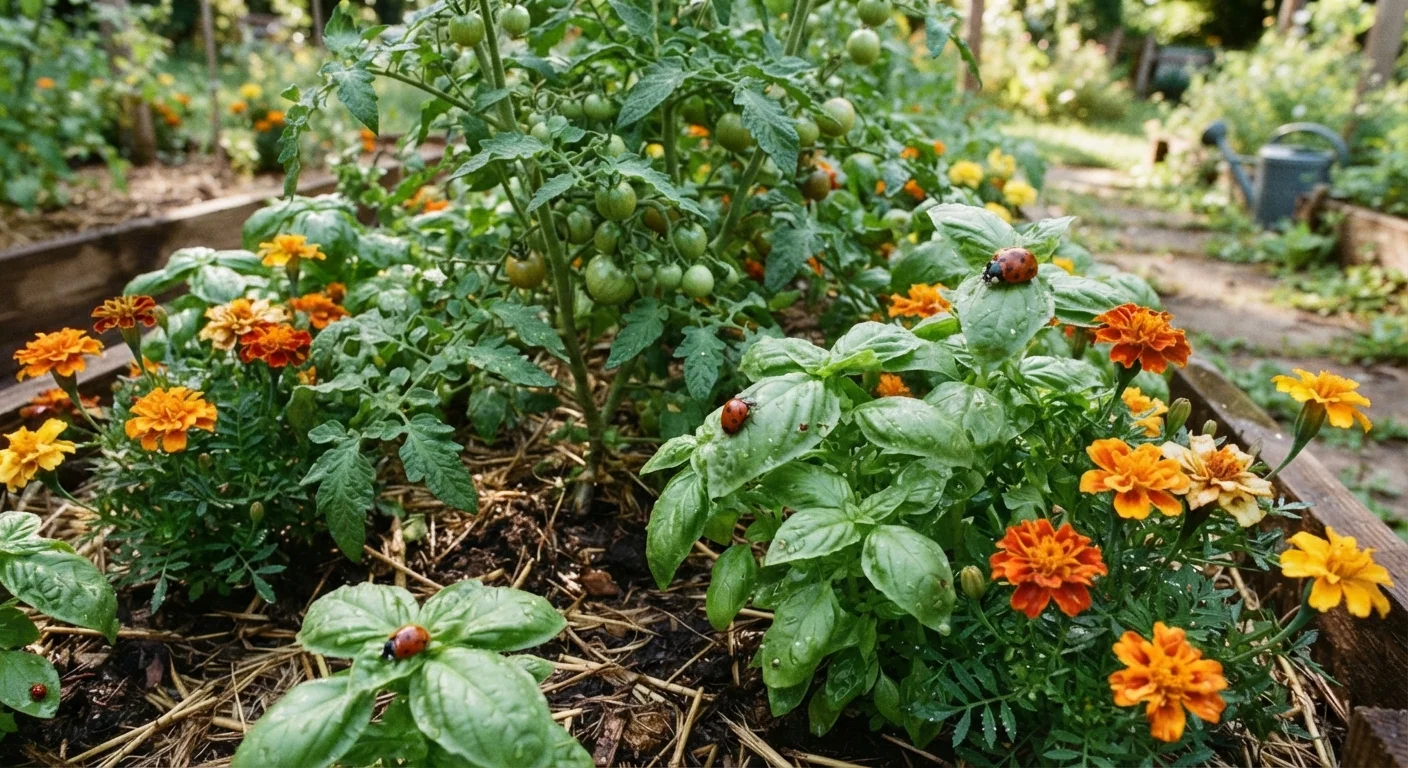
Why Natural Pest Control Is Worth the Effort
Chemical pesticides can solve immediate pest problems, but they often come with trade-offs — killing beneficial insects, disrupting soil biology, and leaving residues on edible plants. Natural pest control methods sidestep many of these issues by working with garden ecosystems rather than against them.
The approaches that hold up over time tend to be preventive, layered, and rooted in good growing practices. That means starting with soil health, choosing the right plant neighbors, and creating conditions where pests are outcompeted rather than eliminated. For those growing vegetables in limited space, the same principles apply — see container gardening guidance for adapting these strategies to patios and balconies.
Use physical barriers to block pests at the source.
Row covers, fine mesh netting, and copper tape physically prevent insects, slugs, and flying pests from reaching plants. These barriers work before pests arrive, making them one of the most reliable preventive tools available. They require no chemistry and won't harm beneficial species.
Plant pest-confusing companions alongside vulnerable crops.
Certain plants emit volatile compounds that mask the scent of neighboring crops or actively repel common pests. Interplanting these companions reduces pest pressure without interrupting the garden ecosystem.
Attract and protect beneficial insects as active pest managers.
Ladybugs, lacewings, ground beetles, and parasitic wasps naturally regulate aphid, caterpillar, and whitefly populations. Maintaining a habitat that supports them — including flowering plants for nectar and undisturbed mulched ground — keeps these allies present and active throughout the season.
Apply targeted, low-impact treatments only when identification confirms a problem.
Not every insect is a pest. Acting on sight alone can destroy the beneficial insects doing the work for you. When treatment is genuinely needed, options like insecticidal soap or neem oil have narrow impact profiles and break down quickly compared to broad-spectrum sprays.
Rotate crops annually to break pest and disease cycles.
Many soil-dwelling pests and fungal pathogens overwinter near the roots of their preferred host plants. Moving plant families to new beds each season disrupts these cycles before they establish, reducing pressure on subsequent crops.
Building a Pest-Resistant Garden from the Ground Up
Many pest problems trace back to stressed plants. Overcrowded beds, poor drainage, and depleted soil all weaken plants and make them easier targets. Spacing plants correctly — so air circulates freely and roots aren't competing — is one of the most overlooked forms of pest prevention. Our guide on why new gardeners overplant covers this in depth.
Soil rich in organic matter supports the microbial activity that keeps plant immune systems robust. Compost is one of the most practical inputs for building that foundation — composting at home explains how to make it work in a typical backyard setup.
~35%
Crop losses attributed to pests globally
According to estimates cited by the Food and Agriculture Organization of the United Nations, pests account for roughly 35% of potential crop yield losses each year.
Over 1,500
Beneficial insect species found in North American gardens
Research from university extension programs notes that the vast majority of insects found in gardens are neutral or beneficial — only a small fraction are true pests.
Companion Planting and Biological Controls That Deliver Results
Once your soil and spacing are dialed in, companion planting and beneficial insects give you two more reliable layers of protection.
Companion planting uses the natural chemistry of certain plants to confuse, repel, or trap pests. The science behind these pairings is well-documented — companion planting strategies breaks down both the evidence and the practical combinations worth trying. Marigolds near squash, for instance, are widely used to deter aphids and whiteflies, while dill and fennel attract predatory wasps that feed on caterpillars.
Encouraging beneficial insects means offering what they need: nectar sources, undisturbed habitat, and a pesticide-free environment. Resist the urge to treat at the first sign of any insect — identification matters before action.
“The single greatest lesson the garden teaches is that our relationship with the planet need not be zero-sum, and that as long as the sun shines and people still have time to tend it, gardens will endure.”
— Michael Pollan, Author and journalist writing on food, nature, and agriculture