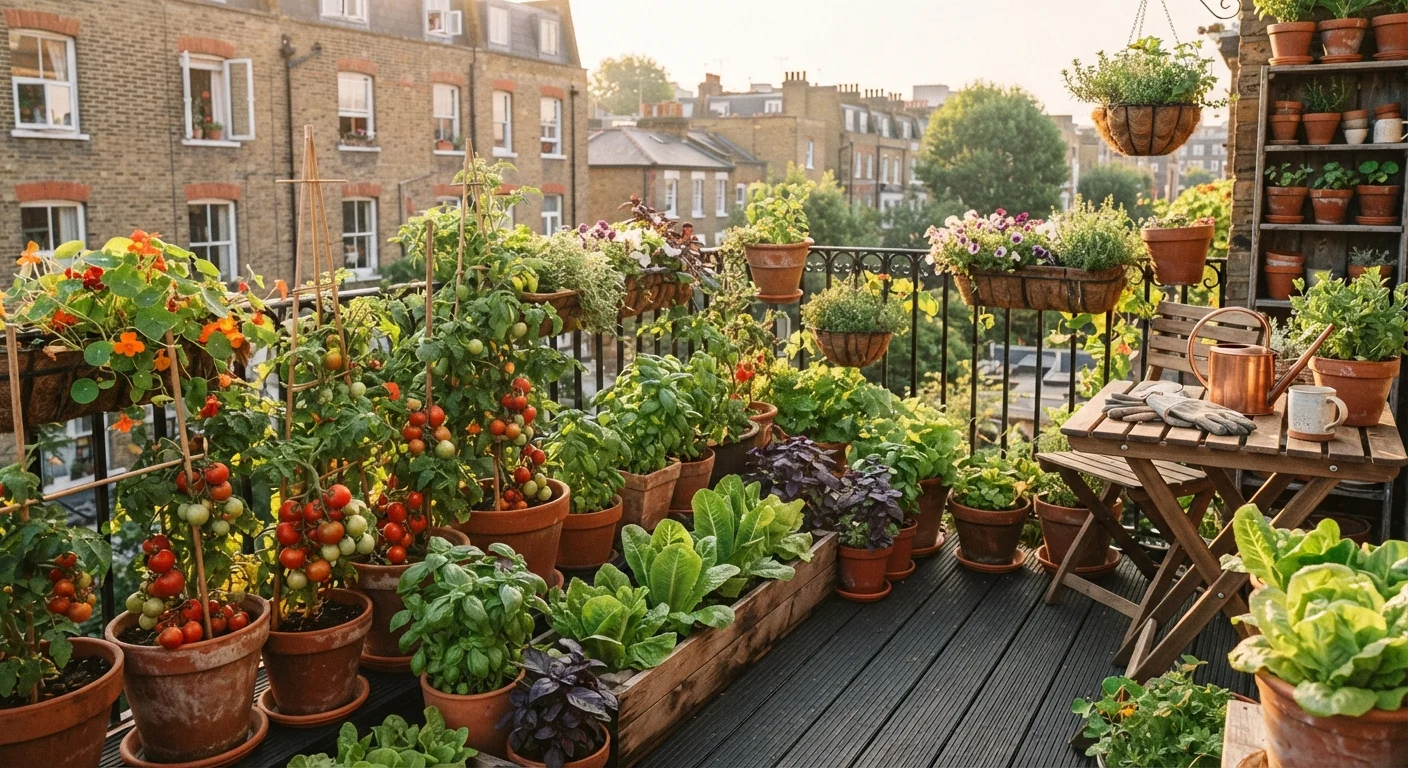
Why Container Gardening Works for Small Spaces
A lack of yard space has never meant a lack of growing potential. Container gardening lets you cultivate food on patios, balconies, rooftops, and front stoops — essentially any surface that receives adequate sunlight. Unlike an in-ground plot, containers give you complete control over soil quality, placement, and microclimate, which can actually make growing easier rather than harder.
The key advantage is mobility. If afternoon sun scorches your pepper plants in July, you move them. If a late frost threatens, you bring pots inside overnight. That flexibility is something a raised bed or traditional row garden can't offer. For renters in particular, containers mean you can take your entire garden with you when you move.
If you're newer to food gardening in general, our ground-up vegetable gardening primer covers foundational concepts like site selection and first harvests that apply even to container setups. And if you're designing the outdoor space around your containers, outdoor living space design ideas can help you think through the broader layout.
80%
of Americans live in urban or suburban areas
U.S. Census Bureau data consistently shows most Americans live in settings where yard space is limited or absent, making container growing relevant to the majority.
6+ hrs
Daily sun needed for most vegetables
University extension guidelines generally recommend at least six hours of direct sun daily for fruiting vegetables like tomatoes and peppers to produce well.
5 gallons
Minimum pot size for tomatoes and peppers
Most cooperative extension programs recommend a minimum 5-gallon container for fruiting crops to allow adequate root development and moisture retention.
Choosing the Right Containers
Container choice shapes nearly every outcome in a patio or balcony garden. The three factors that matter most are size, material, and drainage holes.
Size Matters More Than Most Beginners Expect
Undersized pots are one of the most common beginner errors. A pot that looks big enough often isn't. As a general rule: herbs can manage in containers as small as 6–8 inches in diameter, but most vegetables need 12 inches minimum — and tomatoes, eggplant, and peppers do best in 5-gallon (roughly 12-inch-diameter) containers or larger. Root vegetables like carrots need depth: at least 12 inches, preferably more.
Material Trade-Offs
- Terracotta: Breathable and attractive, but dries out quickly and can crack in freezing temperatures.
- Plastic: Lightweight and moisture-retentive — a practical choice for balconies with weight limits.
- Fabric grow bags: Excellent drainage and air pruning of roots; affordable and collapsible for storage.
- Wood: Insulates roots well and looks natural, but heavier and subject to rot over time without a liner.
Drainage Is Non-Negotiable
Every container must have drainage holes. Roots sitting in standing water will rot, regardless of what plant variety you choose. If you've fallen in love with a decorative pot that lacks holes, use it as a cachepot — placing a properly draining inner pot inside it, and emptying any accumulated water regularly.
Choose light-colored containers for balconies with intense afternoon sun — dark pots absorb heat and can raise root-zone temperatures enough to stress plants during summer peaks.
Root zone temperature directly affects nutrient and water uptake; keeping it moderate improves overall plant health and yield in hot, exposed locations.
Group your containers closely together — plants in proximity create a shared humidity zone that slows moisture loss from individual pots and reduces watering frequency.
Transpiration from nearby plants raises local humidity modestly, which can meaningfully extend the time between waterings in dry or windy conditions.
Potting Mix and Drainage Essentials
Never fill containers with soil dug from the ground. In-ground soil compacts in pots, cutting off the oxygen roots need and causing drainage problems. A quality potting mix — sometimes labeled container mix — is formulated to stay loose and drain well even after repeated watering.
Look for mixes that include components like perlite or coarse sand for aeration, and peat moss or coco coir for moisture retention. Some mixes include a slow-release fertilizer charge to feed plants for the first few weeks — useful but not essential.
Improving Your Mix
For vegetables, consider adding a few handfuls of compost to enrich your potting mix before planting. Homemade compost works well here; our guide on composting kitchen scraps at home explains how to produce it reliably. Avoid adding native soil from your yard — it introduces compaction and potential pests.
Some gardeners place a layer of gravel at the bottom of pots to improve drainage. Research has shown this practice can actually create a perched water table that keeps the lowest layer of potting mix wetter, not drier — skip the gravel and focus instead on well-structured potting mix and functional drain holes.
Refresh Your Potting Mix Each Season
Potting mix breaks down over time, losing its structure and drainage capacity. At the start of each growing season, refresh containers by removing at least the top third of old mix and replacing it with fresh mix plus a scoop of compost. For annual crops like tomatoes and basil, starting with entirely fresh mix each year produces the most consistent results.
Best Vegetables and Herbs for Containers
Not every plant adapts equally well to pot life. The most successful container crops share a few traits: compact growth habit, high yield relative to space, and tolerance for the warmer, faster-draining conditions containers create.
Reliable Vegetable Choices
- Cherry and patio tomatoes: Dwarf and determinate varieties produce heavily in 5-gallon containers. Indeterminate types can work with sturdy staking, but require larger pots.
- Peppers (sweet and hot): Naturally compact and well-suited to containers; they also appreciate the warmth containers absorb.
- Lettuce and salad greens: Shallow-rooted and fast-maturing; ideal for smaller pots and window boxes.
- Bush beans: Compact bush varieties outperform climbing types in containers.
- Radishes and green onions: Quick-growing and space-efficient — great for filling gaps between larger plantings.
Herbs That Thrive in Pots
Most culinary herbs are naturally adapted to well-drained, somewhat lean conditions — making them ideal container plants. Basil, parsley, chives, thyme, oregano, and mint all perform well. Note: Mint spreads aggressively and should always be kept in its own container to prevent it from overtaking others.
Placing complementary plants together can also improve results. Our article on companion planting strategies covers the logic behind combinations like basil and tomatoes, which translates directly to container groupings.
Spacing still matters even in pots. Resist the urge to crowd plants — our piece on why new gardeners overplant explains how overcrowding leads to poor yields and disease.
Watering, Feeding, and Ongoing Care
Container plants dry out significantly faster than in-ground plants because the pot's limited volume of soil heats up quickly and loses moisture through the sides — especially with terracotta or fabric containers. During warm weather, most vegetable containers need watering at least once a day, sometimes twice.
How to Water Correctly
Water thoroughly until it drains freely from the bottom holes. This ensures the entire root zone is moistened, not just the surface. Shallow watering encourages shallow roots, making plants more stress-prone. Check moisture by pressing your finger an inch into the mix — if it feels dry at that depth, water.
Drip irrigation systems can be adapted to container setups and reduce the daily labor significantly. Our honest look at drip irrigation covers the trade-offs honestly, including cost and setup complexity.
Feeding Container Plants
Nutrients leach out of containers with every watering, so container vegetables need more frequent feeding than in-ground plants. A balanced, water-soluble fertilizer applied every two to three weeks during the growing season is a common approach. Slow-release granular fertilizers mixed into the potting medium at planting can supplement but rarely replace liquid feeding for heavy-producing vegetables like tomatoes and peppers.
Avoid Overfeeding with Nitrogen
More fertilizer is not always better. Excess nitrogen encourages lush leafy growth at the expense of flowers and fruit — common with tomatoes and peppers that suddenly show dense foliage but few vegetables. Follow package directions and resist the temptation to double doses when plants seem slow to produce.
Common Mistakes and How to Avoid Them
Even experienced gardeners encounter container-specific pitfalls. Being aware of them upfront saves time, money, and frustration.
Using the Wrong Soil
Garden soil in containers is the single most common mistake. It compacts, drains poorly, and stunts root development. Always use a commercial potting mix or a well-amended homemade equivalent.
Choosing Full-Size Varieties
A standard beefsteak tomato or full-size zucchini can technically grow in a container, but the results are usually disappointing. Seek out varieties specifically bred for container or patio growing — they're labeled accordingly and deliver far better outcomes in limited space.
Ignoring Your Balcony's Microclimate
Balconies and patios create their own growing conditions. Reflected heat from walls and pavement, wind exposure at upper floors, and shade from railings all affect what will thrive. Understanding microclimates can help you read your specific conditions more accurately before you plant.
Underestimating Weight on Balconies
Large containers filled with damp potting mix are heavy. If you're gardening on an elevated balcony, check the weight rating with your building manager or a structural professional before loading it with many large pots. Lightweight plastic containers and fabric bags help manage this concern without sacrificing growing space.
Balcony Weight Limits Vary Significantly
Building codes and structural designs differ widely. A filled 15-gallon container can weigh 50–80 pounds when wet. Before setting up a large container garden on any elevated balcony, consult your building's management or a structural professional to confirm the load capacity. This is especially important in older buildings or rental properties.
Container gardening rewards consistent attention more than technical expertise. Once you understand the relationship between pot size, drainage, watering frequency, and plant selection, the system becomes intuitive — and the harvests, even from a modest balcony, can be genuinely satisfying.