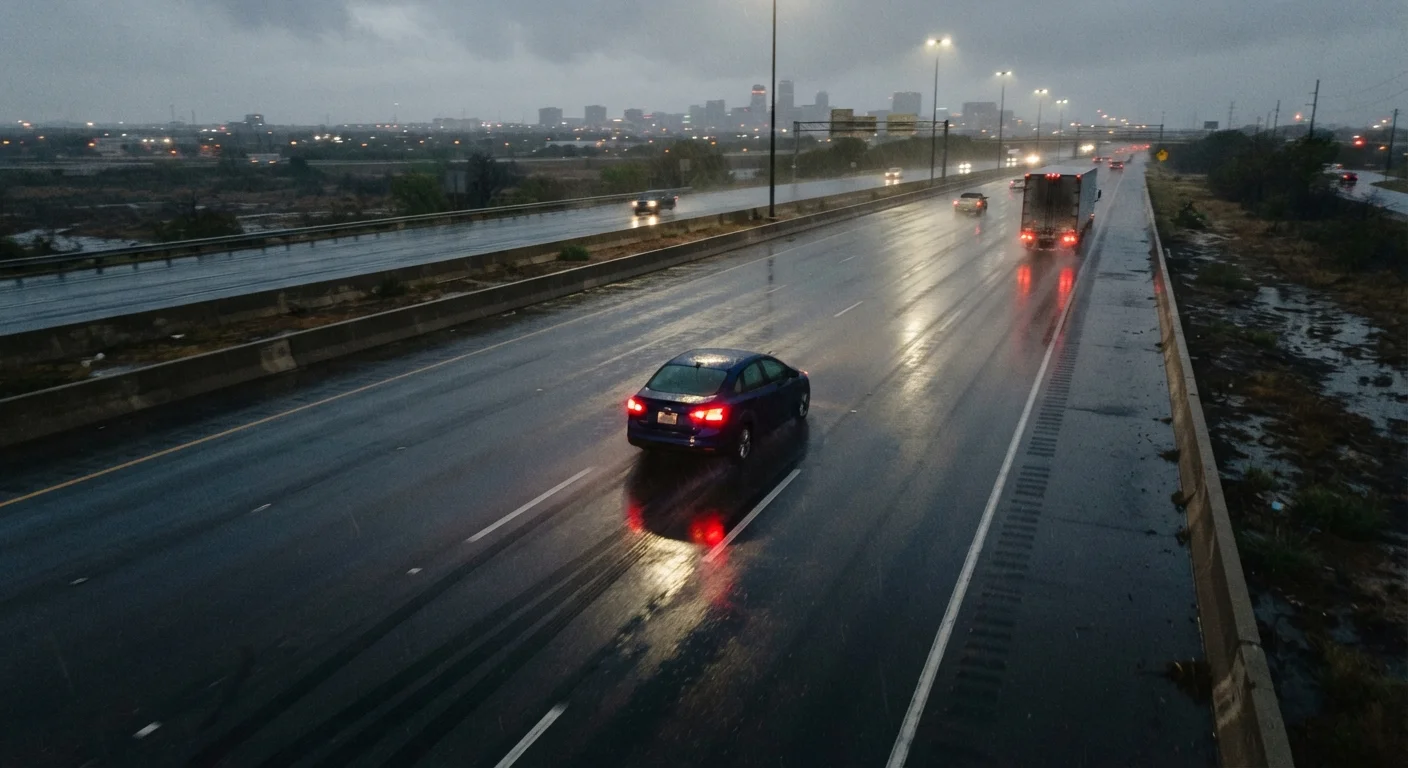
Two Forces Working Against You
Every time you press the brake pedal, two separate forces determine how quickly your vehicle actually stops. The first is reaction distance — the ground your car covers while your brain processes a threat and your foot moves to the brake. The second is braking distance — the additional distance the car travels while the brakes are actively slowing the vehicle. Together, these form your total stopping distance.
Understanding this distinction matters because drivers tend to underestimate reaction distance. At 60 mph, a typical reaction time of 1.5 seconds translates to roughly 132 feet of ground covered before braking even starts. Add braking distance on top of that, and the total stopping distance at highway speed runs well over 300 feet — longer than a football field.
“Speed is the most important factor in road crash severity. At higher speeds, drivers have less time to react and vehicles take much longer to stop — the consequences of a collision are also far more severe.”
— Road Safety Foundation, U.K.-based road safety research organization
Why Speed Changes the Equation Dramatically
The relationship between speed and stopping distance is not linear — it is exponential. This is because kinetic energy, the energy your moving vehicle carries, increases with the square of velocity. When you double your speed, you quadruple the energy your brakes must dissipate. In practical terms:
- At 30 mph, a typical dry-road stopping distance is roughly 75 feet.
- At 60 mph, that figure climbs to approximately 300 feet — four times as far, not twice.
- At 70 mph, stopping distance can exceed 400 feet under ideal conditions.
This exponential relationship is why traffic engineers and road safety agencies treat even modest speed reductions near schools or worksites as genuinely meaningful. See speed rules in school and construction zones for how these physics inform U.S. regulatory requirements.
132 ft
Reaction distance at 60 mph (1.5-second reaction)
Based on standard physics calculations used in driver education curricula across the U.S.
4×
Braking distance increase when speed doubles
Kinetic energy grows with the square of velocity — a fundamental physics relationship reflected in road safety research worldwide.
50%+
Additional stopping distance on wet roads
Wet asphalt significantly reduces tire-to-road friction; estimates vary by tire condition, speed, and water depth.
How Road Conditions Multiply the Risk
Physics sets the theoretical minimum, but real-world road conditions routinely push stopping distances far beyond laboratory estimates. Friction between tires and road surface is what actually brings a car to a halt — and anything that reduces that friction extends your stopping distance.
- Wet asphalt can increase stopping distance by 50% or more compared to dry conditions.
- Ice can reduce tire friction so severely that stopping distance multiplies several times over.
- Loose gravel or debris similarly degrades braking performance in unpredictable ways.
Even a light rain changes the equation meaningfully by mixing road oils with water in a way that creates a slippery film. Adjusting your habits for reduced visibility conditions covers the practical responses drivers need for each weather type.
Check Your Tires Before Winter Driving
Tire tread depth and inflation pressure both affect braking performance dramatically on wet or icy roads. Before winter weather arrives, have your tires inspected by a qualified technician. Many tire shops offer free tread-depth checks. Properly maintained tires are one of the most cost-effective safety investments a driver can make.
Vehicle Factors That Affect Braking
Driver behavior and road surface get most of the attention, but the vehicle itself plays a significant role in stopping performance. Key factors include:
- Tire condition and inflation
- Worn tread reduces grip dramatically. Under-inflated tires deform under braking load, reducing the effective contact patch with the road.
- Brake system health
- Worn brake pads or warped rotors reduce braking force. Most manufacturers recommend brake inspection at regular service intervals.
- Vehicle weight
- Heavier vehicles carry more kinetic energy and typically require more distance to stop, even with well-maintained brakes. This is especially relevant for trucks and SUVs carrying loads.
- ABS (Anti-lock Braking System)
- ABS prevents wheel lockup during hard braking, helping maintain steering control. It does not eliminate stopping distance — it optimizes it under the prevailing conditions.
Tire blowouts introduce a separate and serious complication. A sudden loss of tire pressure at highway speed changes vehicle dynamics immediately — see what to do in the seconds after a blowout for the right response.
Putting Stopping Distance to Work: Following Distance and Awareness
The most actionable application of stopping-distance awareness is maintaining adequate following distance. The widely cited three-second rule — choosing a fixed roadside point and ensuring at least three seconds pass between when the car ahead passes it and when you do — provides a reasonable baseline on dry roads at moderate speeds. But it has limits.
In rain, low visibility, or at highway speeds, safety guidance generally suggests extending that gap to four or more seconds. Heavily loaded vehicles, older cars with aging brake systems, or drivers experiencing fatigue all warrant additional margin. For a deeper look at following distance, why following distance matters and when to extend it provides practical context.
Stopping-distance awareness is also foundational to defensive driving technique — the practice of anticipating hazards before they require emergency braking in the first place. Speed management, situational scanning, and maintaining space are not separate habits; they work together as a system.
ABS Does Not Shorten All Stopping Distances
Anti-lock Braking Systems help drivers maintain steering control during hard braking and can reduce stopping distances on hard surfaces — but on loose gravel or deep snow, ABS may actually result in longer stopping distances than threshold braking on a locked wheel. Always adjust speed for the surface, regardless of your vehicle's safety technology.